
Free Cost Accounting Format
Download a free cost accounting format in Excel, Word, or PDF to easily record production costs, track expenses, and maintain organised financial records.
- ⚡️Accurate Cost Tracking
- ⚡Better Profit Calculation
- ⚡️Flexible Formats
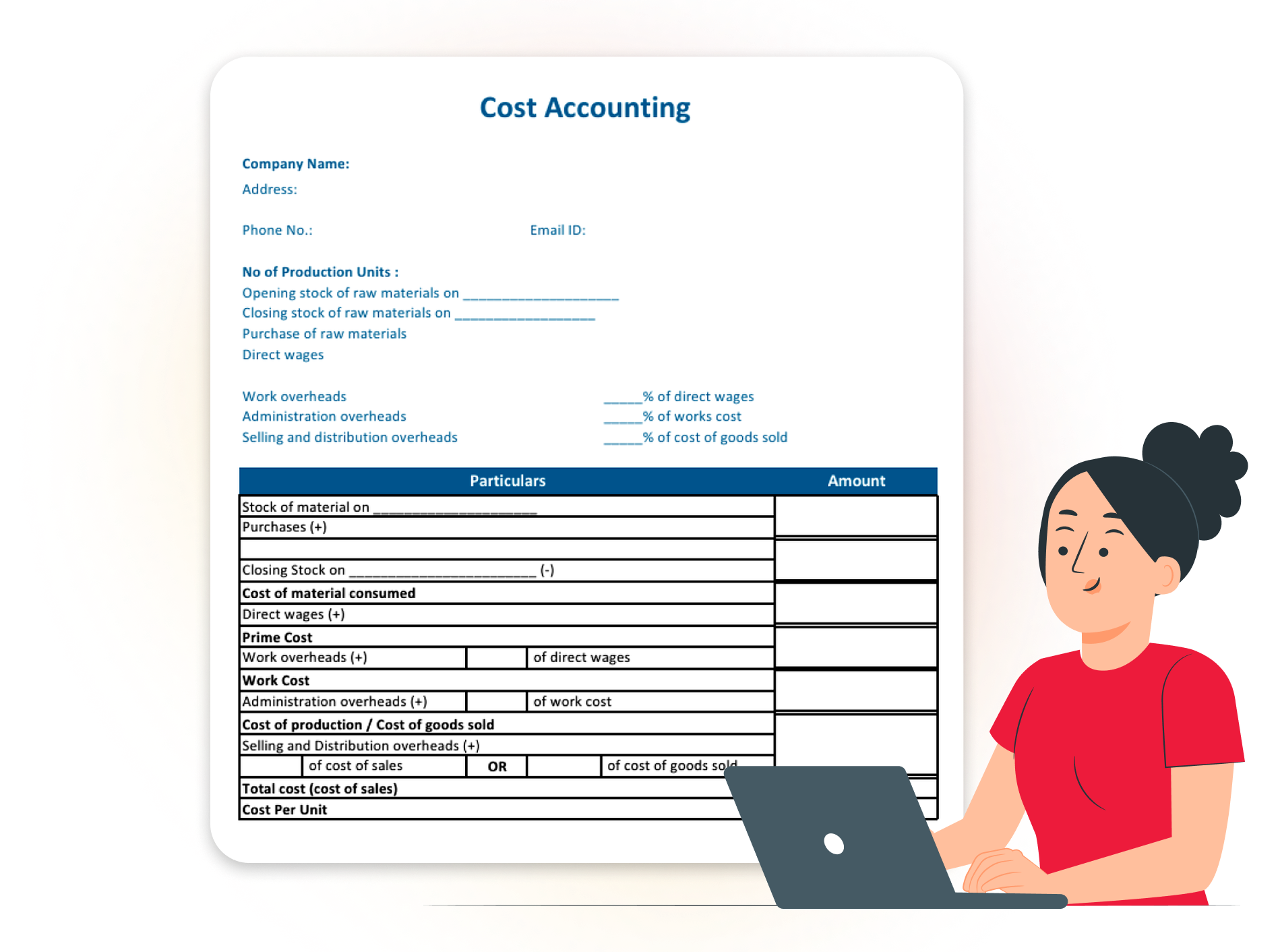
Download Cost Accounting Format
Download the Cost Accounting Format in Excel, Word, or PDF based on your business requirements.
Cost Accounting Format in Word
A format in Word is ideal for presenting cost sheets in meetings and official reporting.
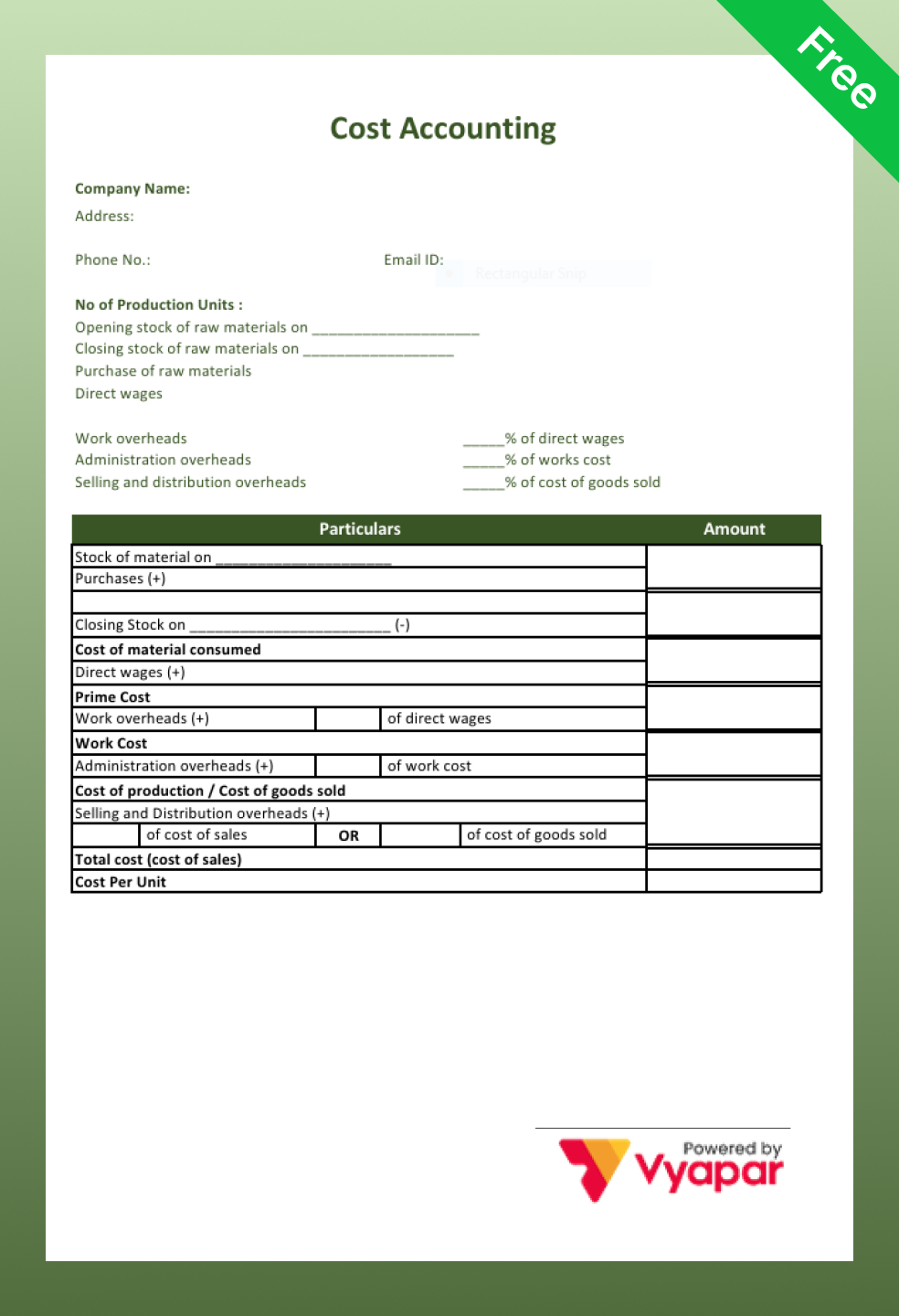
Cost Accounting Format in Word-1

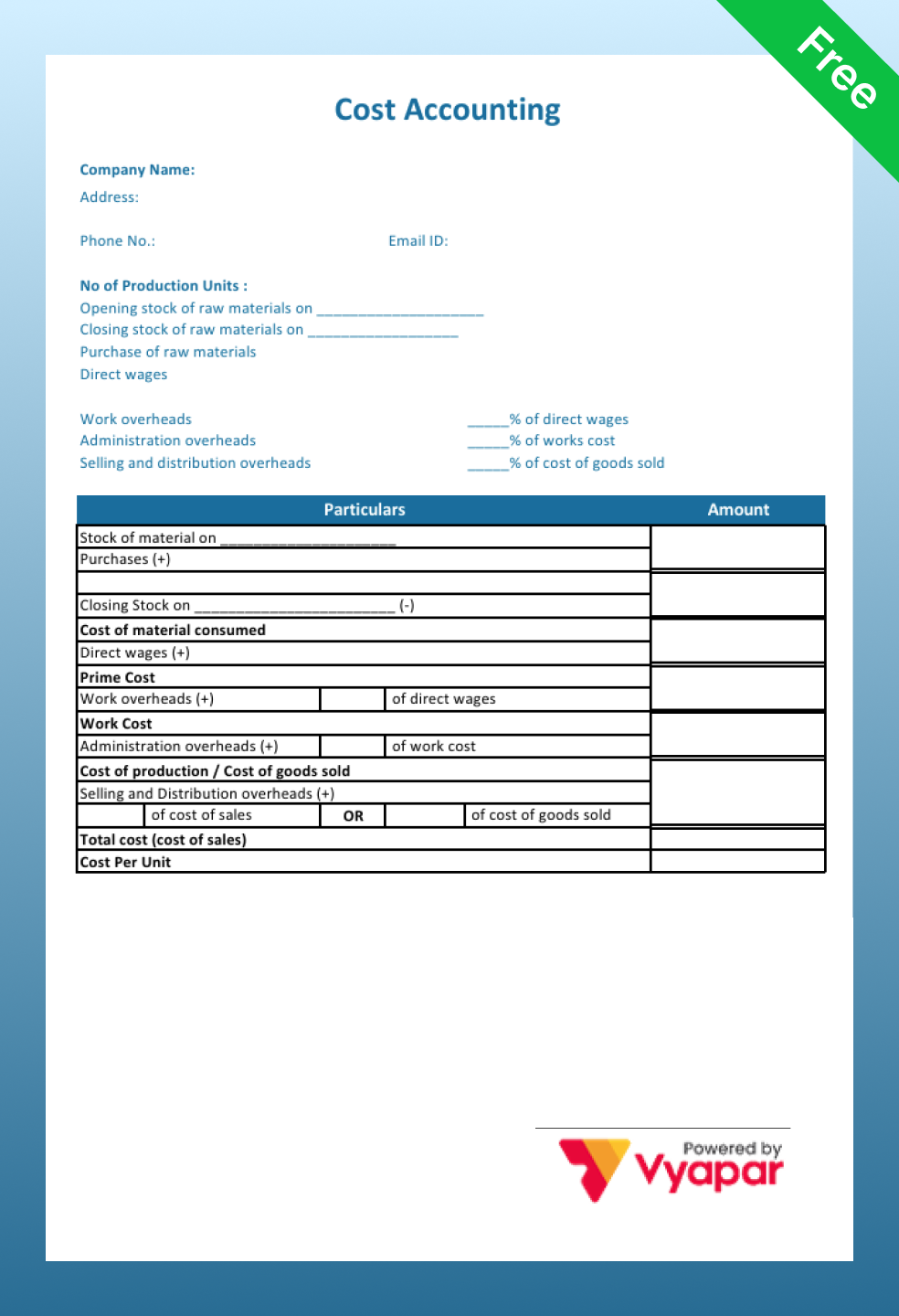
Cost Accounting Format Word-2
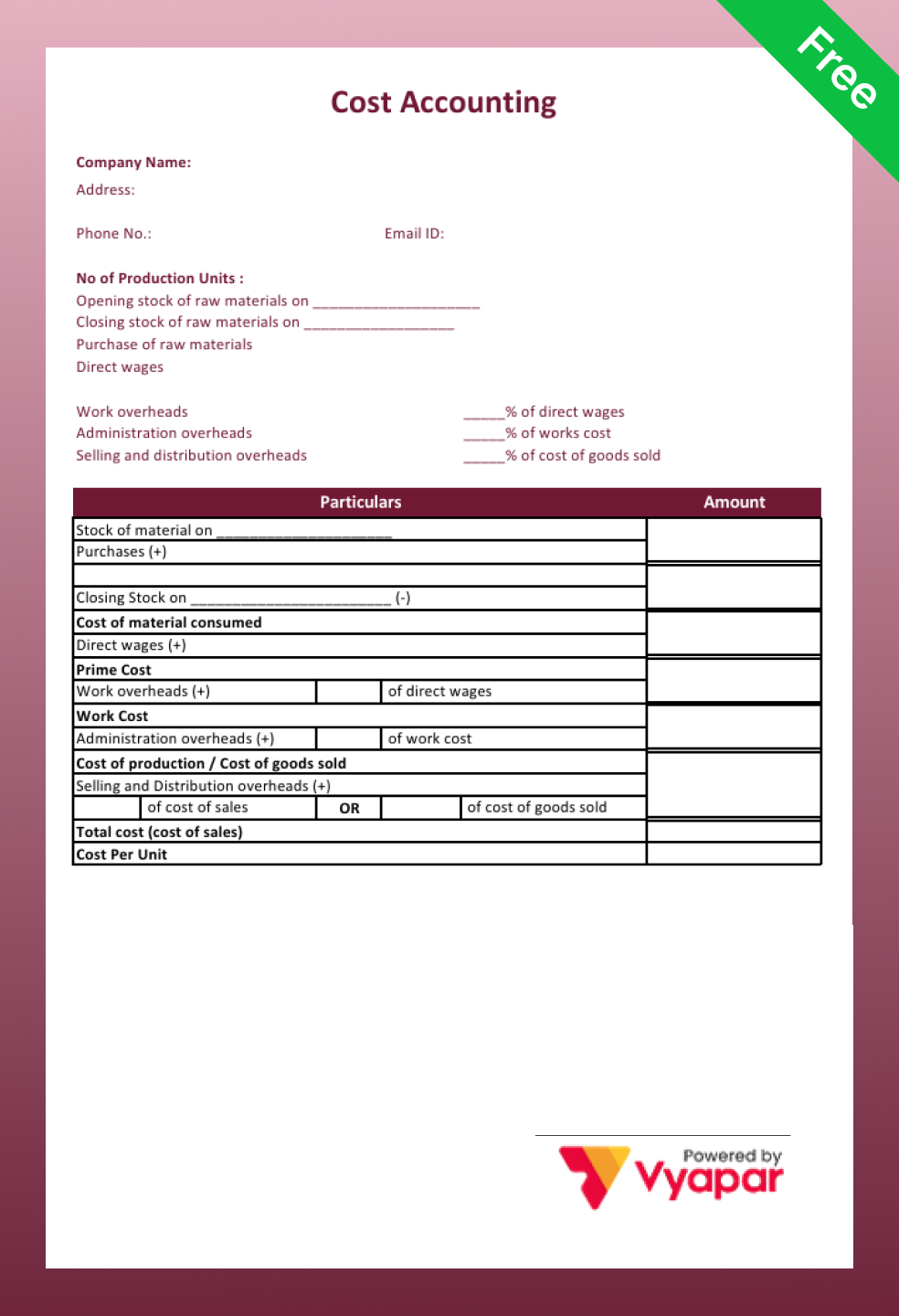
Cost Accounting Template Word-3
Cost Accounting Format in Excel
A format in Excel enables formula-based cost computation, variance analysis, and automated reporting.
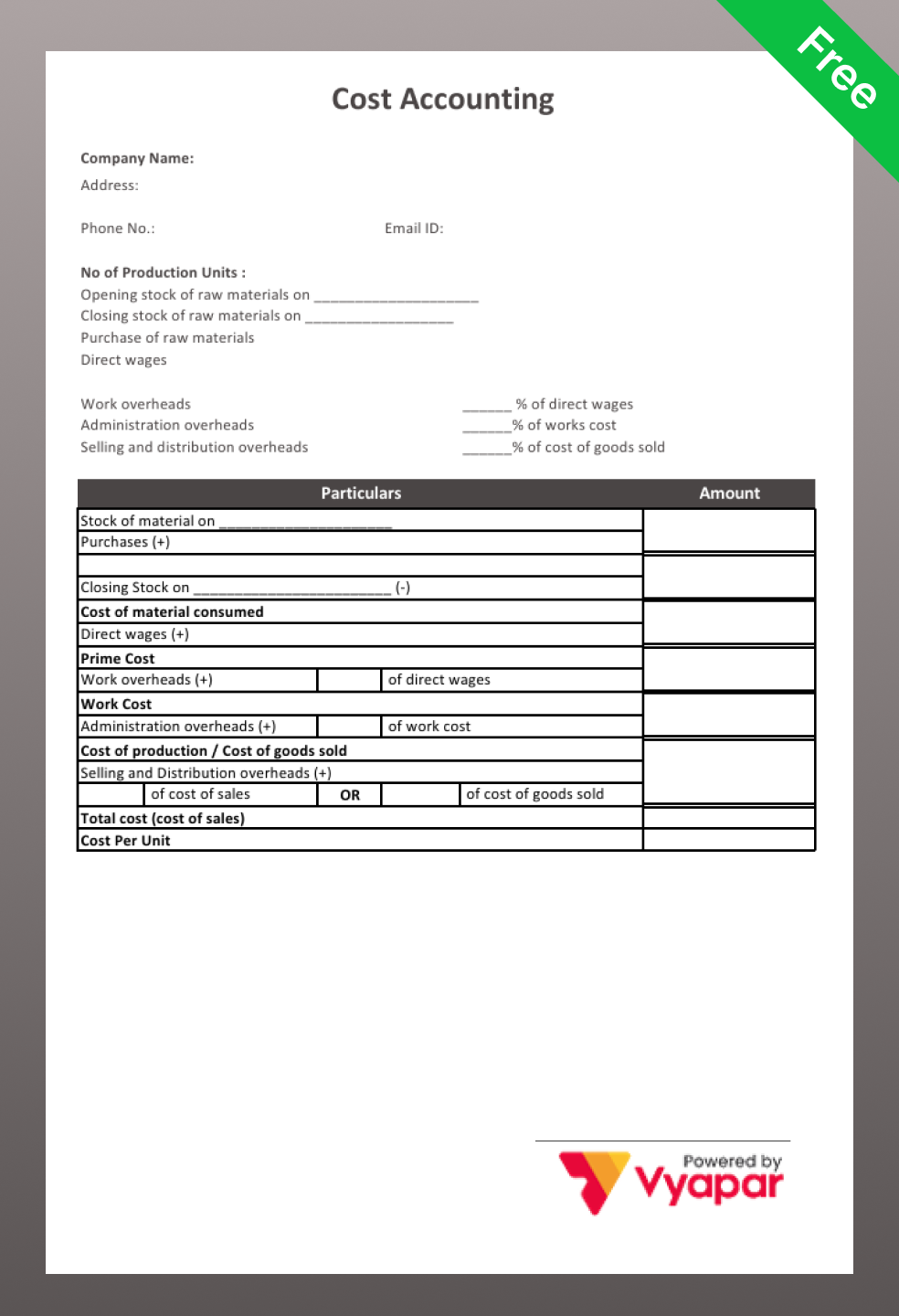
Cost Accounting Format in Excel-1
Cost Accounting Format Excel-2
Cost Accounting Template Excel-3
Cost Accounting Format in PDF
It ensures document integrity and is perfect for audit submission and professional sharing.
Cost Accounting Format in PDF-1
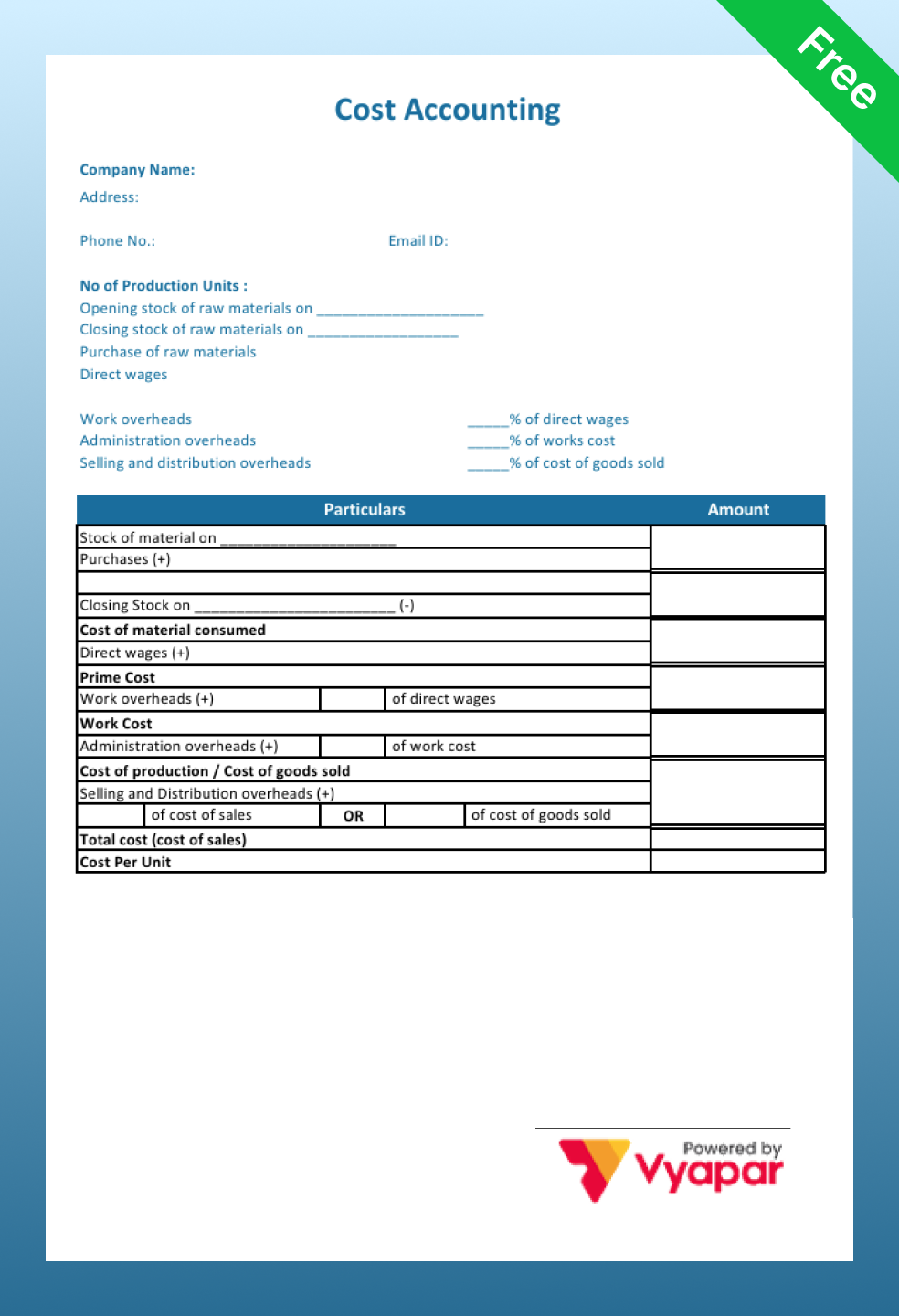
Cost Accounting Format PDF-2
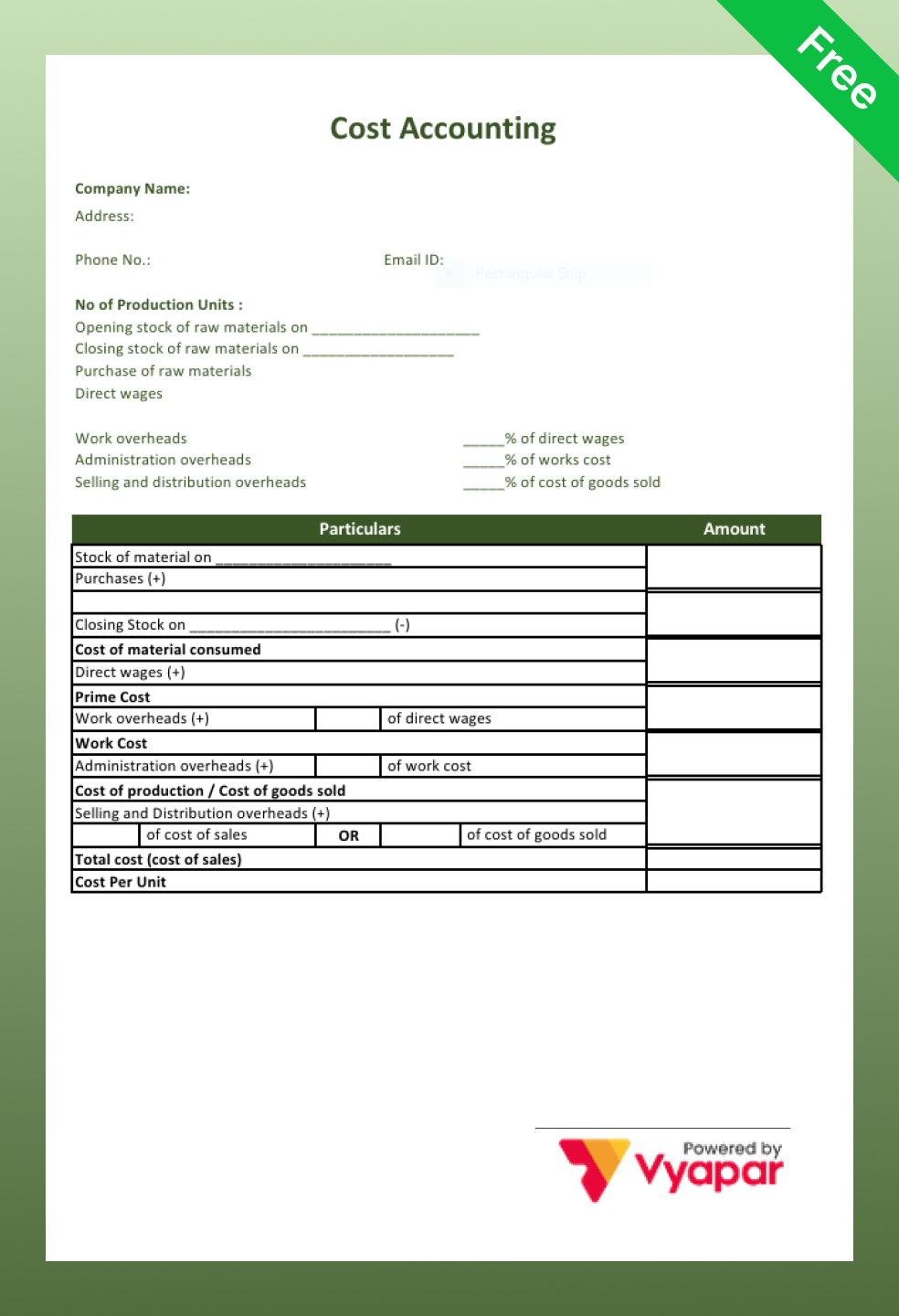
Cost Accounting Template PDF-3
Stop Managing Costs Manually
What is Cost Accounting Format?
A well-structured template is used to record direct materials, direct labour, overheads, and total production costs. It helps businesses determine cost per unit, calculate the total cost of production, and analyse profit margins efficiently.
Unlike general accounting records, cost accounting focuses specifically on production and operational expenses. A well-designed cost accounting template enables management to identify cost trends, control unnecessary spending, and improve pricing strategies.
Key Components of a Cost Accounting Format
A standard cost accounting format or cost accounting template includes the following essential components:

Direct Material Cost
Records opening stock, purchases, and closing stock to calculate material consumed.
Material Consumed = Opening Stock + Purchases – Closing Stock

Direct Labour Cost
Includes wages of workers directly involved in production.
Helps calculate prime cost and measure workforce efficiency.

Direct Expenses
Covers production-related costs like freight, royalty, or special tools. Added to materials and labour to determine the total prime cost.

Factory Overheads
Includes indirect expenses such as electricity, rent, and maintenance.
Allocated to calculate the total production cost accurately.

Administrative & Selling Expenses
Captures office, marketing, and distribution expenses. Helps determine the cost of sales and overall profitability.

Cost of Production & Profit Calculation
Summarises all direct and indirect costs to calculate the total cost and COGS. Helps determine cost per unit and profit margin.
Types of Cost Accounting Templates
Different businesses require different templates depending on their operations. Below are the most commonly used types:
1. Cost Sheet Format
The cost sheet format provides a detailed breakdown of material, labour, direct expenses, overheads, and profit. It is widely used in manufacturing businesses to calculate total production costs and cost per unit using a format.
2. Job Costing Format
The job costing format tracks costs for specific projects or customer orders. It records materials, labour, and overheads separately for each job, making it ideal for contractors and service providers using a customizable template.
3. Process Costing Format
The process costing format is used in industries with continuous production. It calculates cost at each production stage, helping businesses control expenses effectively within a structured cost accounting format.
4. Batch Costing Format
The batch costing format is suitable for businesses that manufacture goods in batches. It calculates the total batch cost and determines the per-unit cost within that batch.
5. Operating Cost Format
The operating cost format is used by service-based businesses to calculate service delivery costs. A professional cost accounting template helps present these costs clearly.
6. Standard Costing Format
This format compares actual costs with pre-determined standard costs to identify variances. Businesses often use a cost accounting template for variance analysis and budgeting control.
Importance of Cost Accounting Format
- Accurate Cost Control: Helps monitor direct materials, labour, and overheads separately, making it easier to reduce wastage and control production expenses.
- Better Pricing Decisions: Provides accurate cost per unit, enabling businesses to set competitive and profitable selling prices.
- Improved Profit Analysis: Clearly compares total production cost with sales revenue to evaluate profit margins effectively.
- Informed Business Decisions: Supports strategic planning such as expansion, budgeting, and cost reduction initiatives.
- Efficient Budgeting: Helps estimate future costs and compare actual expenses with planned budgets.
- Audit & Compliance Support: Maintains organised financial records, improving transparency and simplifying audits.
How to Use a Cost Accounting Format
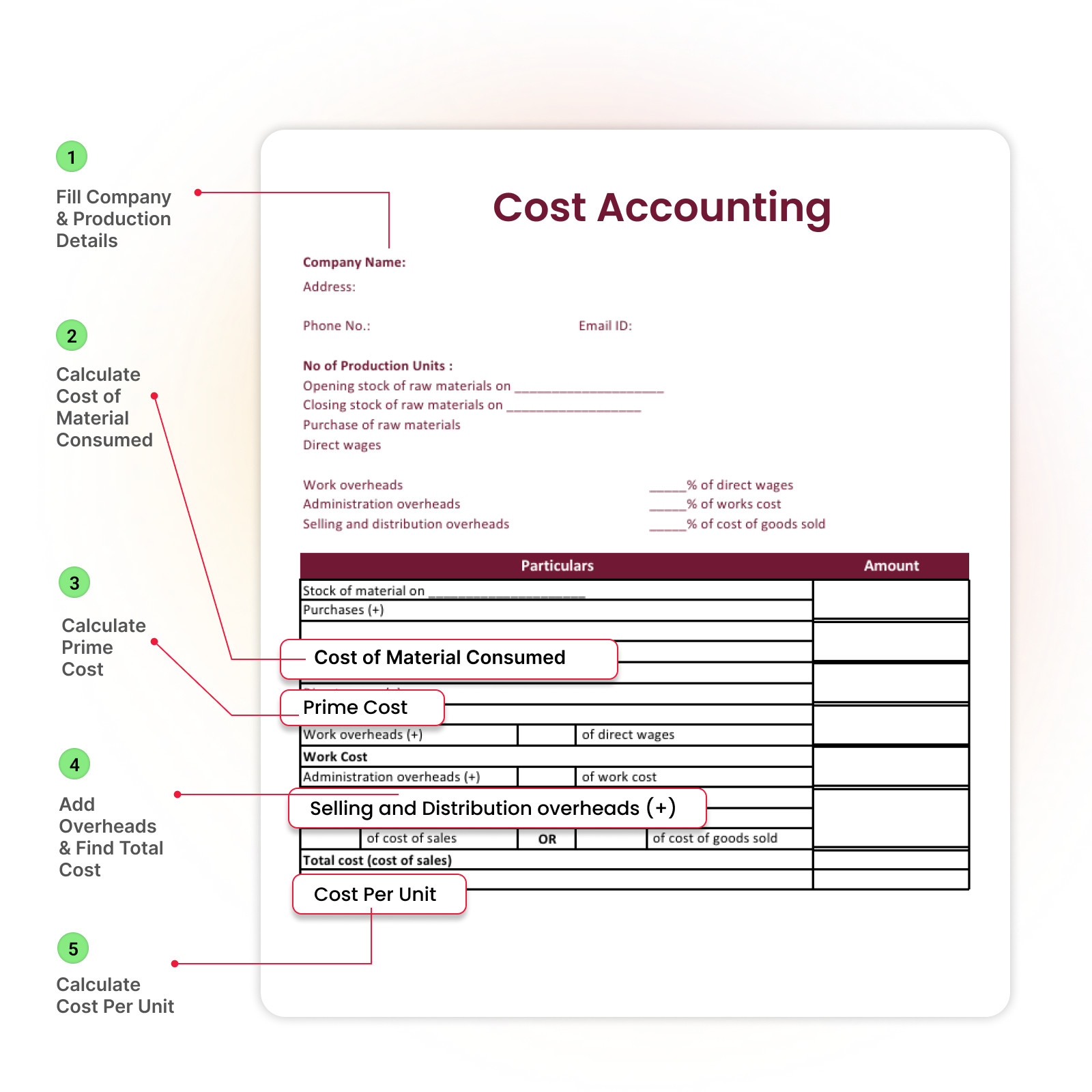
- Fill Company & Production Details: Enter company info, number of production units, raw material stock, purchases, direct wages, and overhead percentages.
- Calculate Cost of Material Consumed: Fill Opening Stock + Purchases – Closing Stock and write the total in the Amount column.
- Calculate Prime Cost: Add Direct Wages to Material Consumed and enter the total under Prime Cost.
- Add Overheads & Find Total Cost:
Add Work Overheads → Work Cost
Add Administration Overheads → Cost of Production
Add Selling & Distribution Overheads → Total Cost (Cost of Sales) - Calculate Cost Per Unit: Divide Total Cost by Number of Production Units and enter the result in the Cost Per Unit row.
Ready to Manage Your Costs Better?
Why Choose Vyapar for Cost Accounting Format?
GST Billing and Invoicing

GST Billing and Invoicing
Vyapar allows you to create GST-compliant invoices, quotations, debit notes, and credit notes in just a few clicks. It automatically calculates CGST, SGST, and IGST, reducing manual errors and ensuring accurate tax reporting. This helps businesses stay compliant while speeding up the billing process.
Inventory Management with Stock Tracking
Inventory Management with Stock Tracking
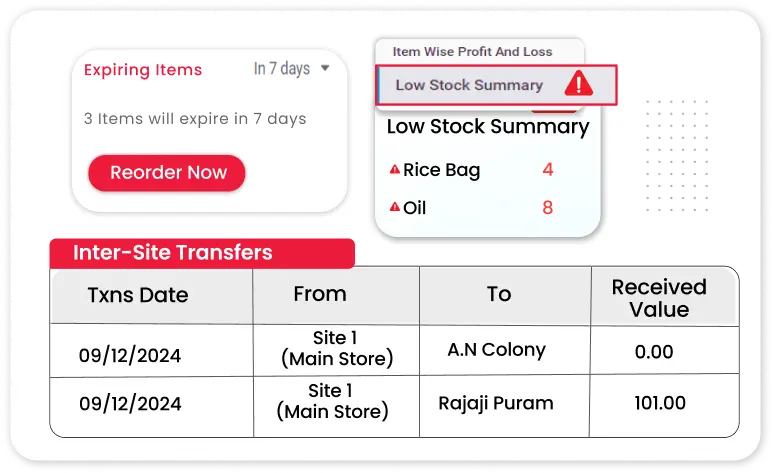
Vyapar app provides real-time inventory tracking, helping you monitor stock levels, track product movement, and set low-stock alerts. It prevents overstocking and stockouts, improves inventory control, and ensures smooth business operations.
Accounting and Financial Reports
Accounting and Financial Reports
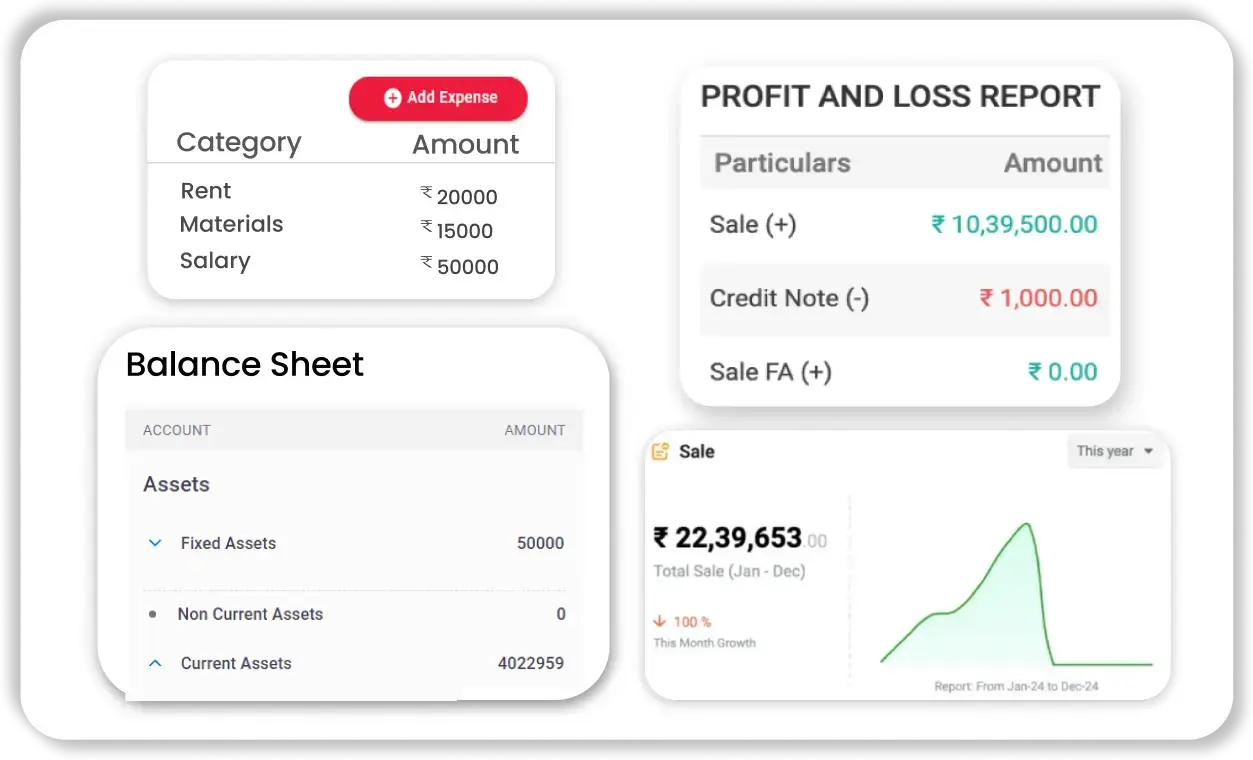
The app generates detailed financial reports such as Profit & Loss statements, Balance Sheets, GST reports, sales summaries, and expense reports. These insights help business owners analyse performance, control costs, and make informed decisions for growth.
Expense and Purchase Management
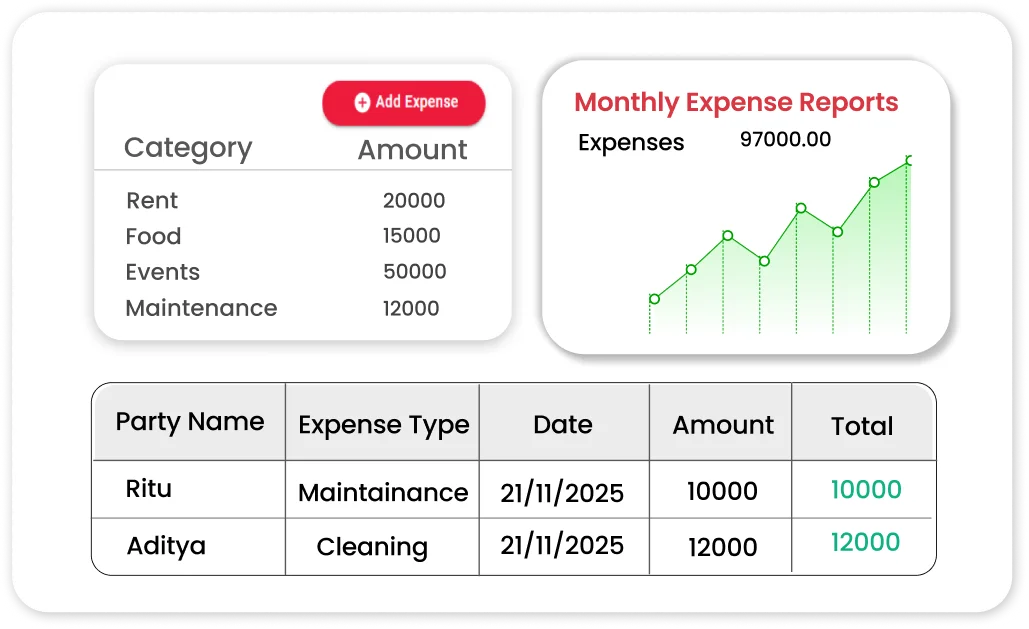
Expense & Purchase Management
Vyapar app helps record daily business expenses and manage purchase entries efficiently. You can track supplier payments, outstanding dues, and cash flow, improving financial transparency and better vendor management.
Multi-Device and Data Backup Support
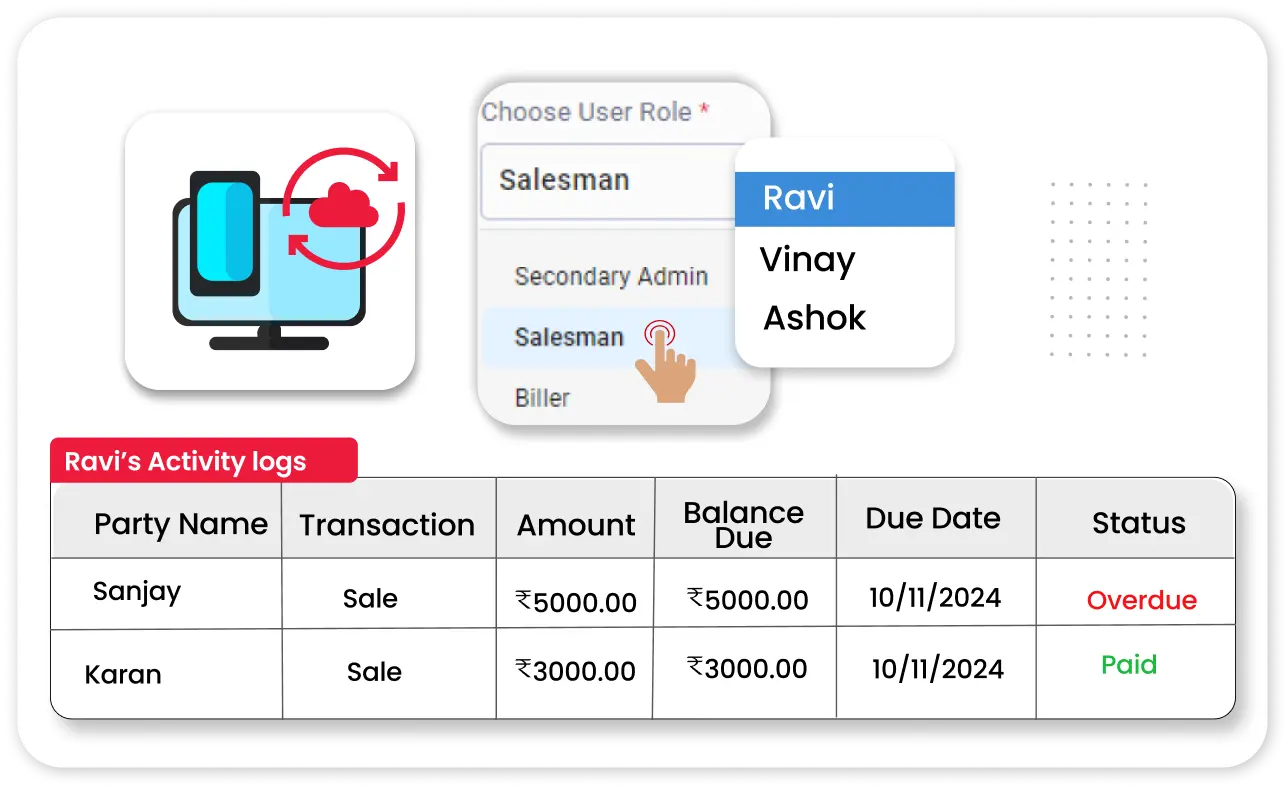
Multi-Device and Data Backup Support
Vyapar offers secure data backup options and multi-device access. This ensures your business data is protected from loss and accessible whenever required, improving reliability and operational continuity


Get a Free Demo
Frequently Asked Questions (FAQ’s)
A standard cost accounting format includes direct material cost, direct labour cost, direct expenses, factory overheads, administrative expenses, cost of production, and profit calculation.
Cost accounting helps small businesses control expenses, set proper selling prices, monitor profit margins, and make informed financial decisions.
Yes, service businesses can use a cost accounting template to calculate operating costs, labour charges, and service delivery expenses.
The cost accounting format consists of the costs that the business incurs from the initial production stage to the closing stock of finished goods. Companies can conveniently analyse the best price for their products and services using this format.
Did not find what you were looking for?


Billing software in India for small businesses