
Debit Note Format in GST
Using a structured debit note format in Excel, Word, or PDF ensures accurate GST compliance and proper accounting records.
- Used to adjust undercharged invoices or incorrect tax amounts
- Helps maintain accurate purchase and sales records
- Essential for GST return filing and audit compliance
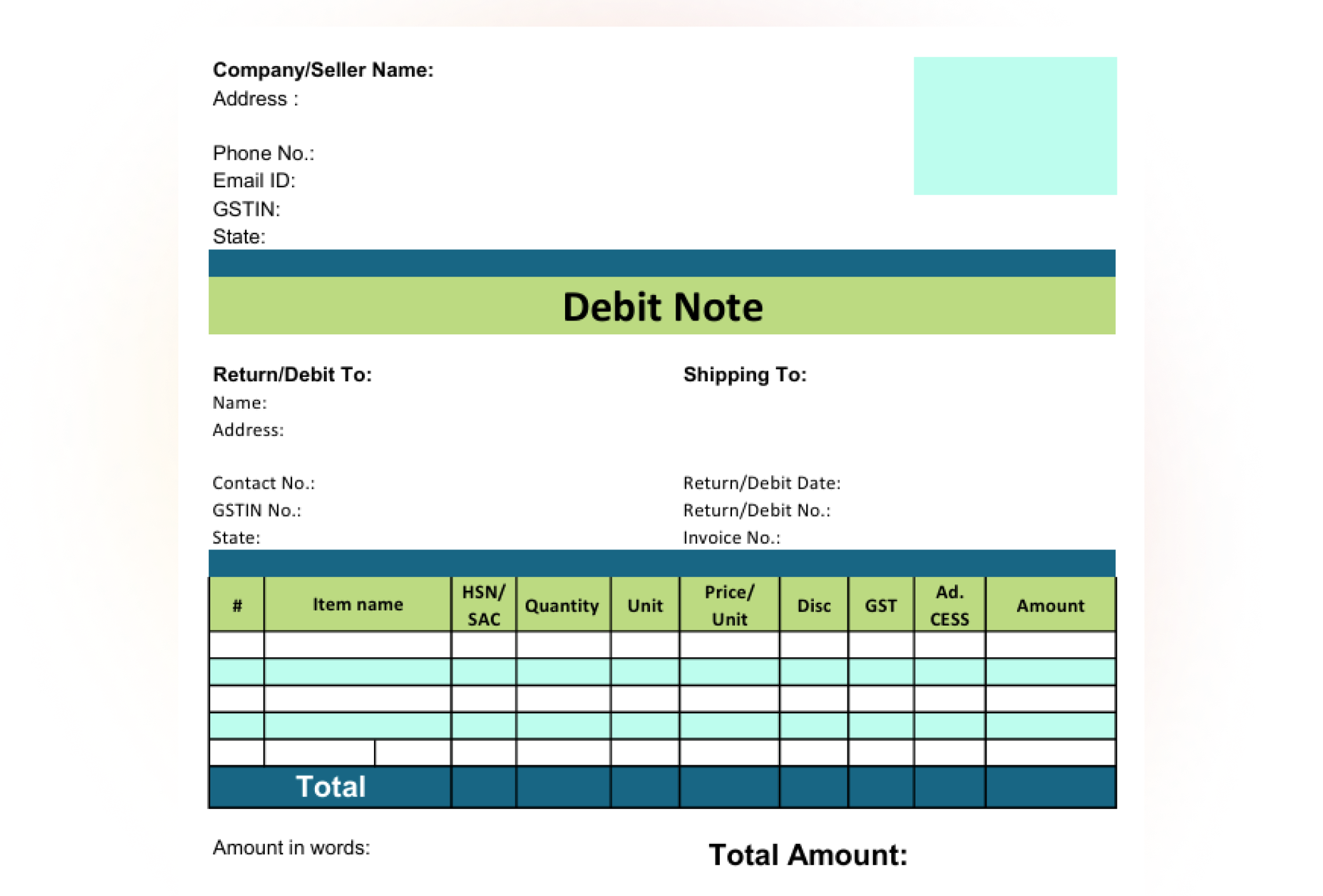
Download Debit Note Format in GST
Prepare a debit note format in GST PDF, debit note format in GST Excel, or debit note format in GST Word, depending on your business requirement.
Debit Note Format in GST in Word
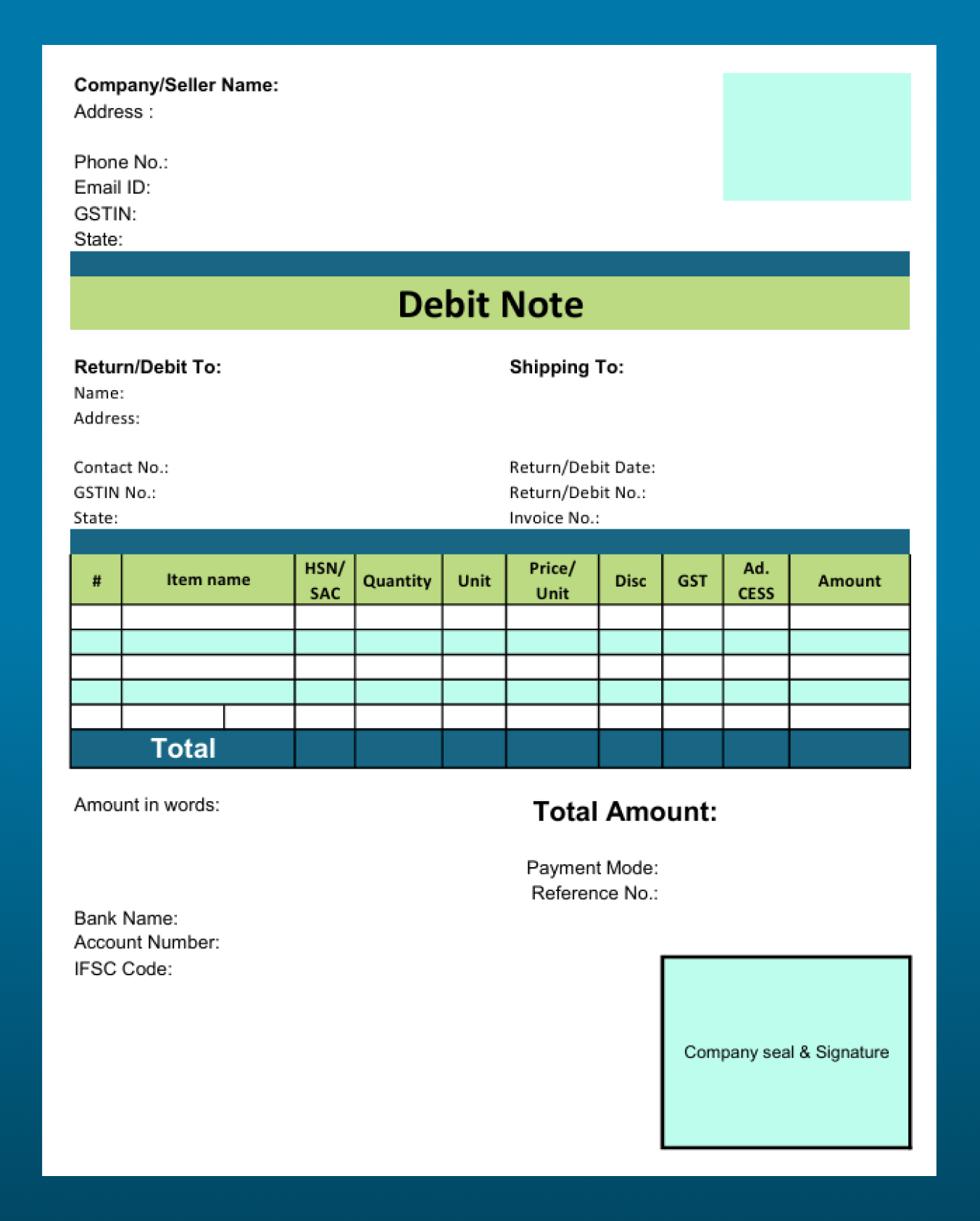
Word-1

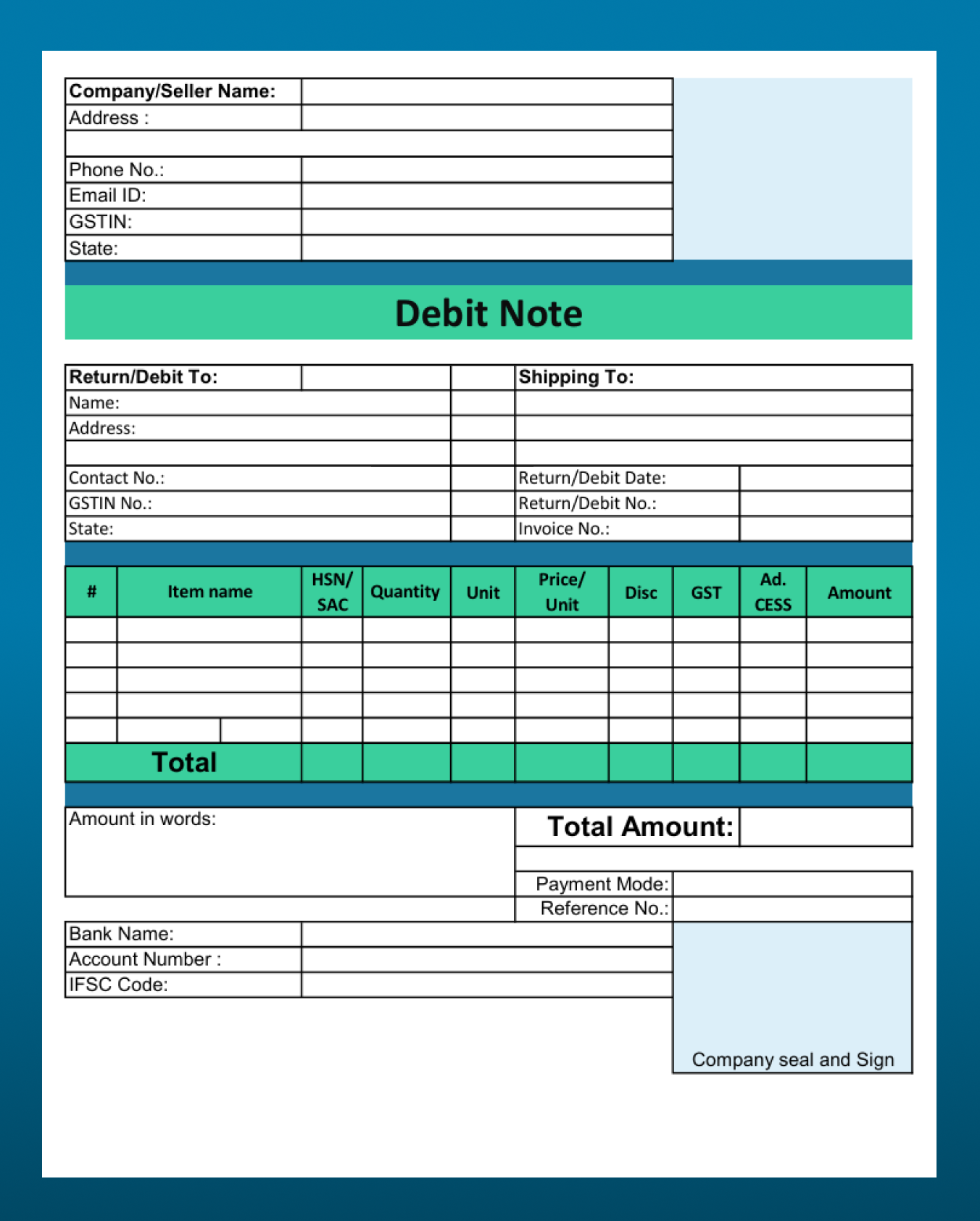
Word-2
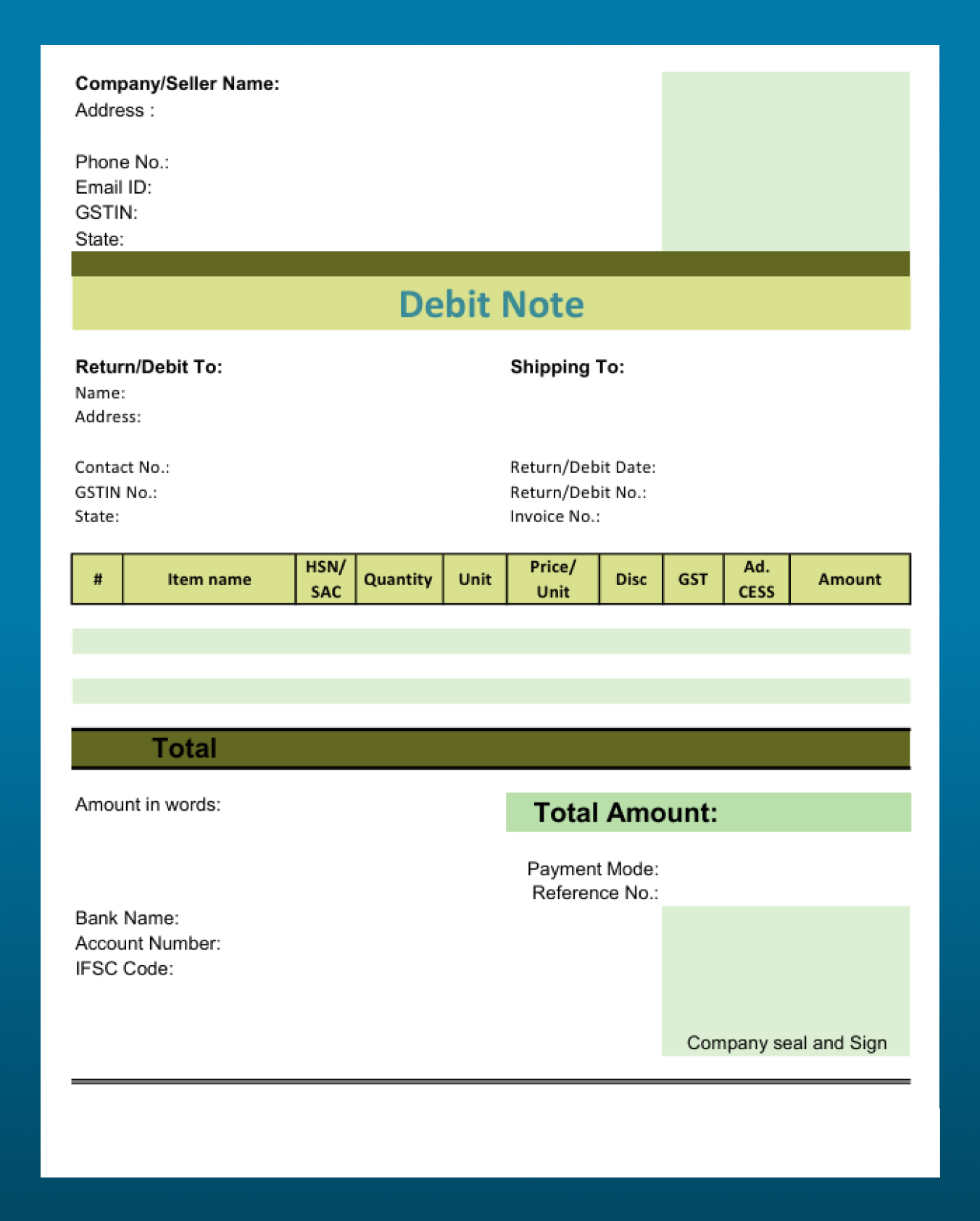
Word-3
Debit Note Format in GST in Excel
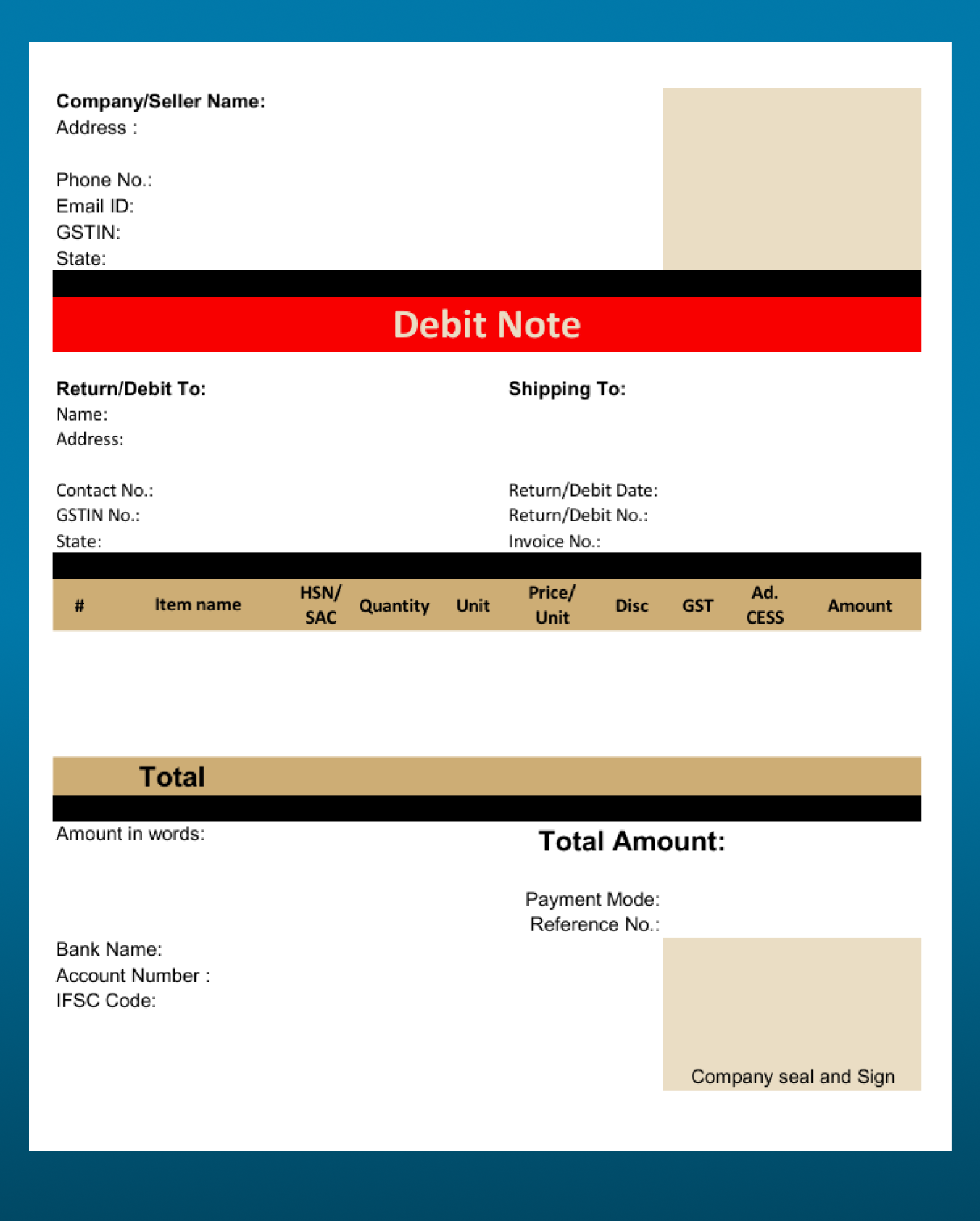
Excel-1
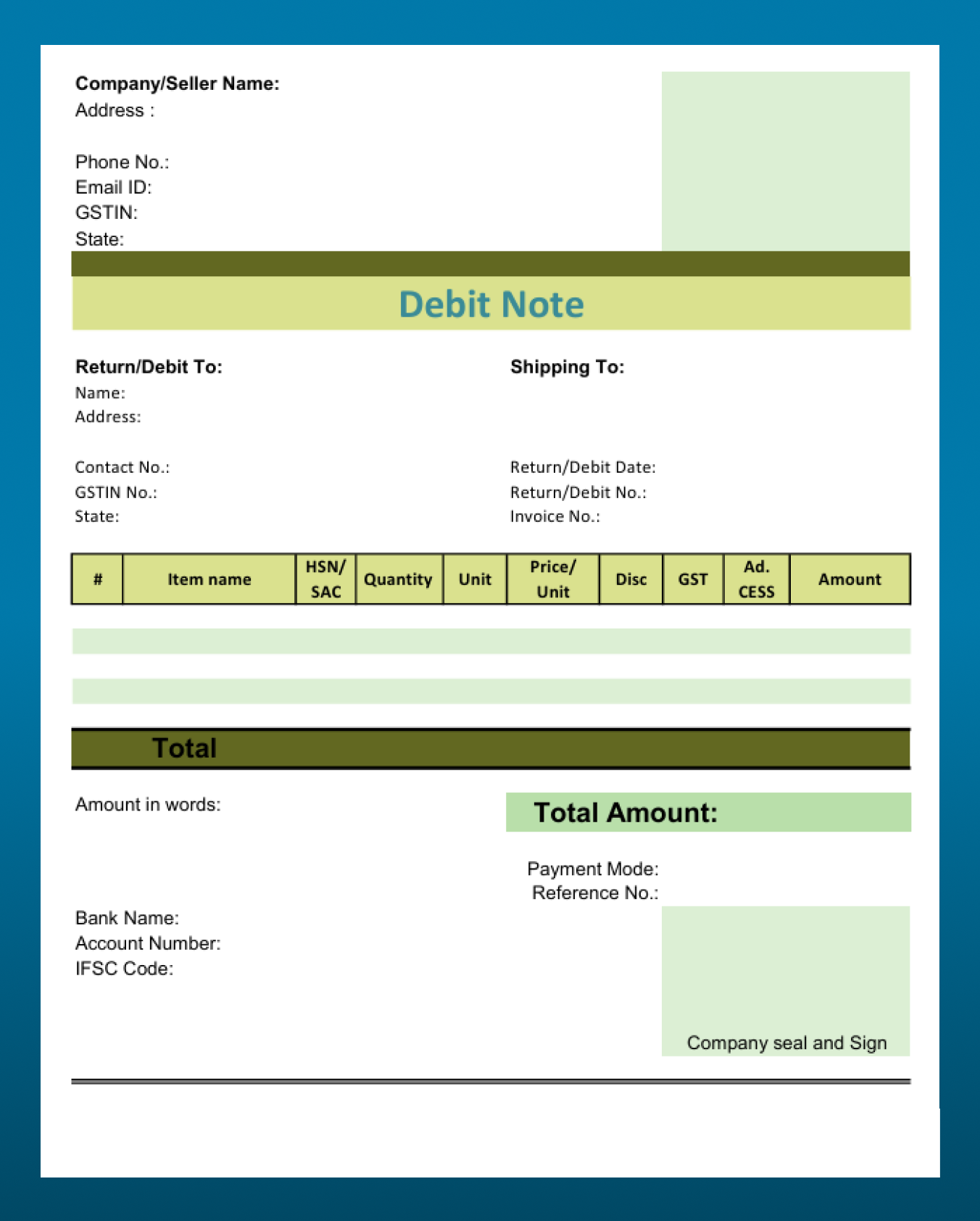
Excel-2
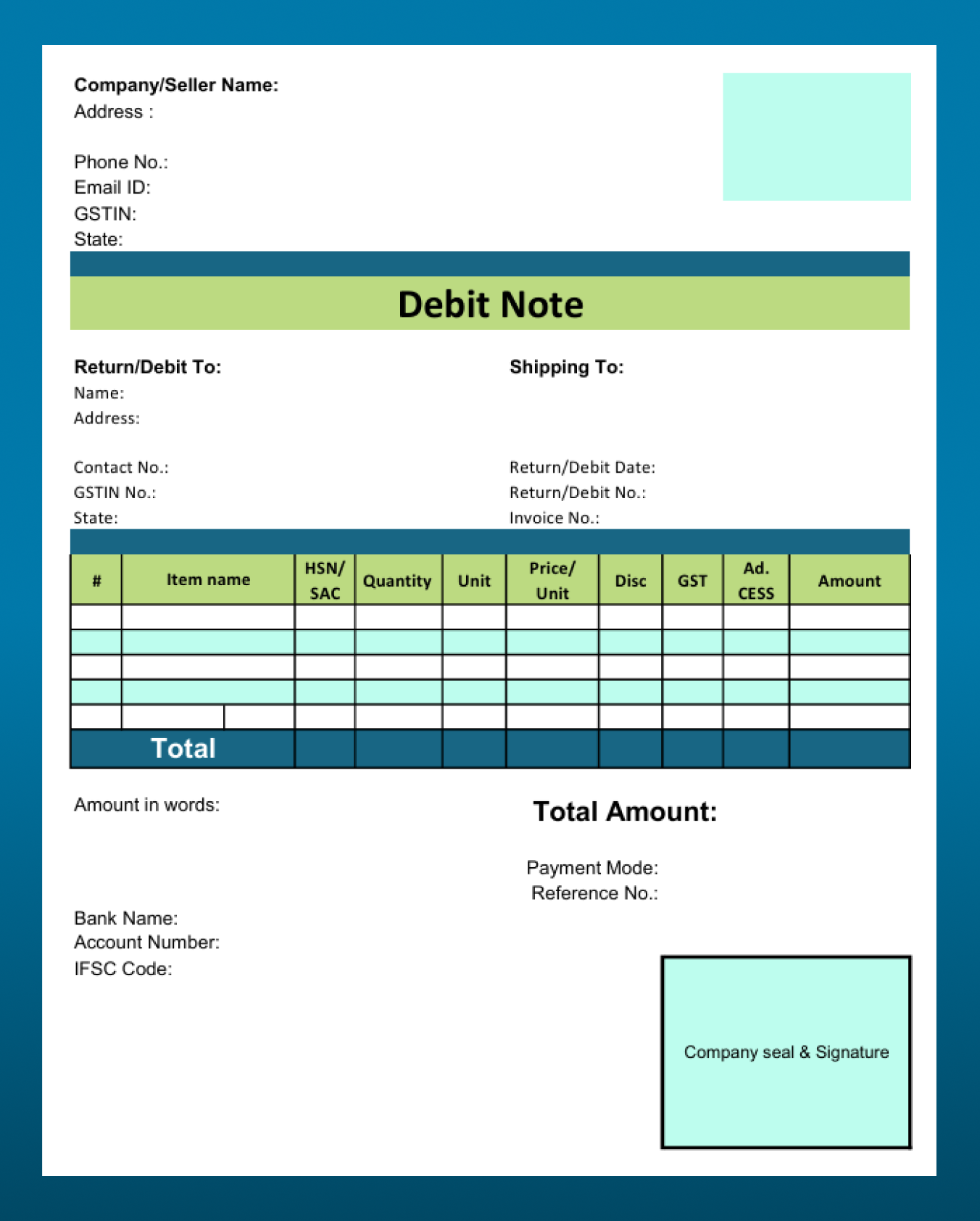
Excel-3
Debit Note Format in GST in PDF
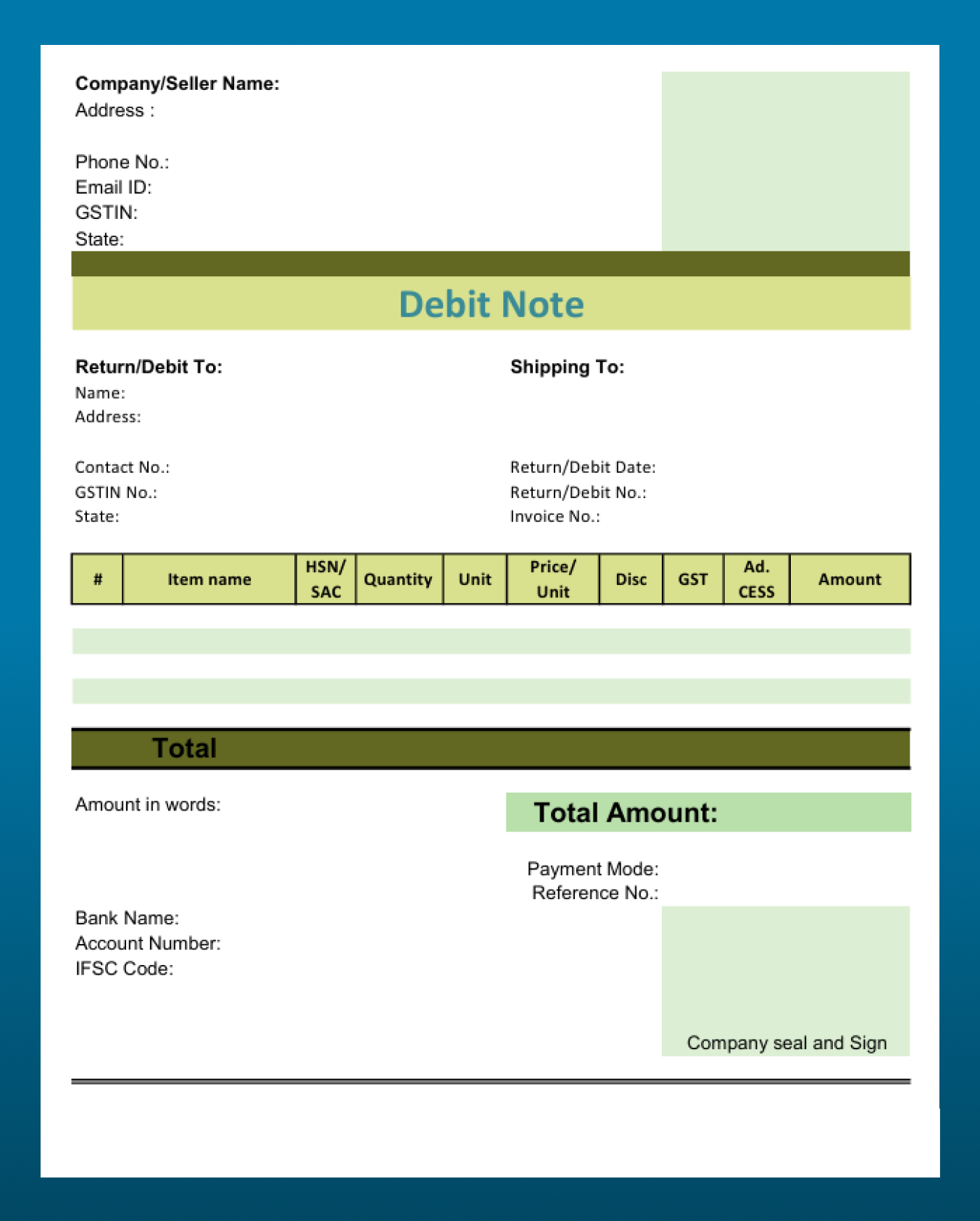
PDF-1
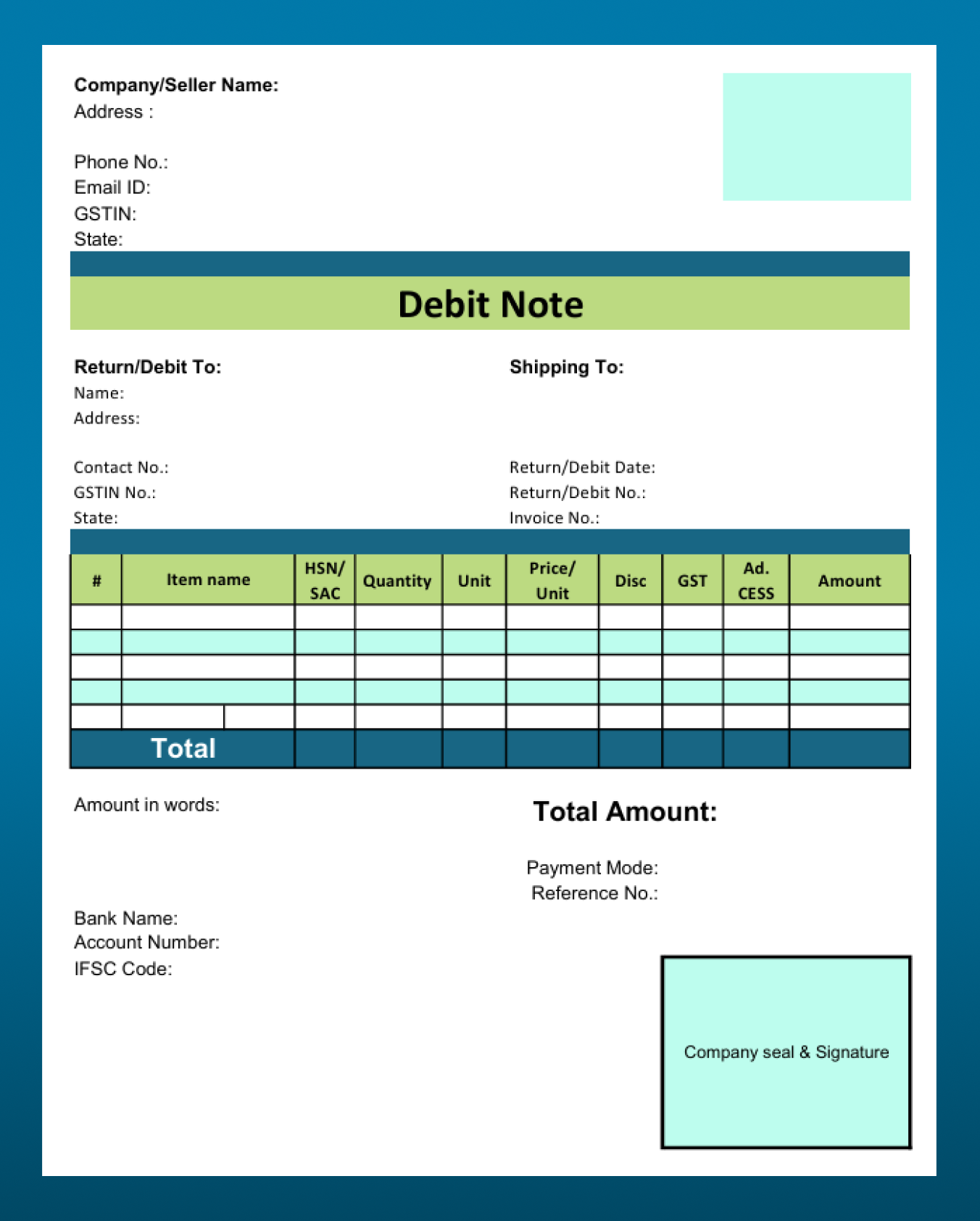
PDF-2
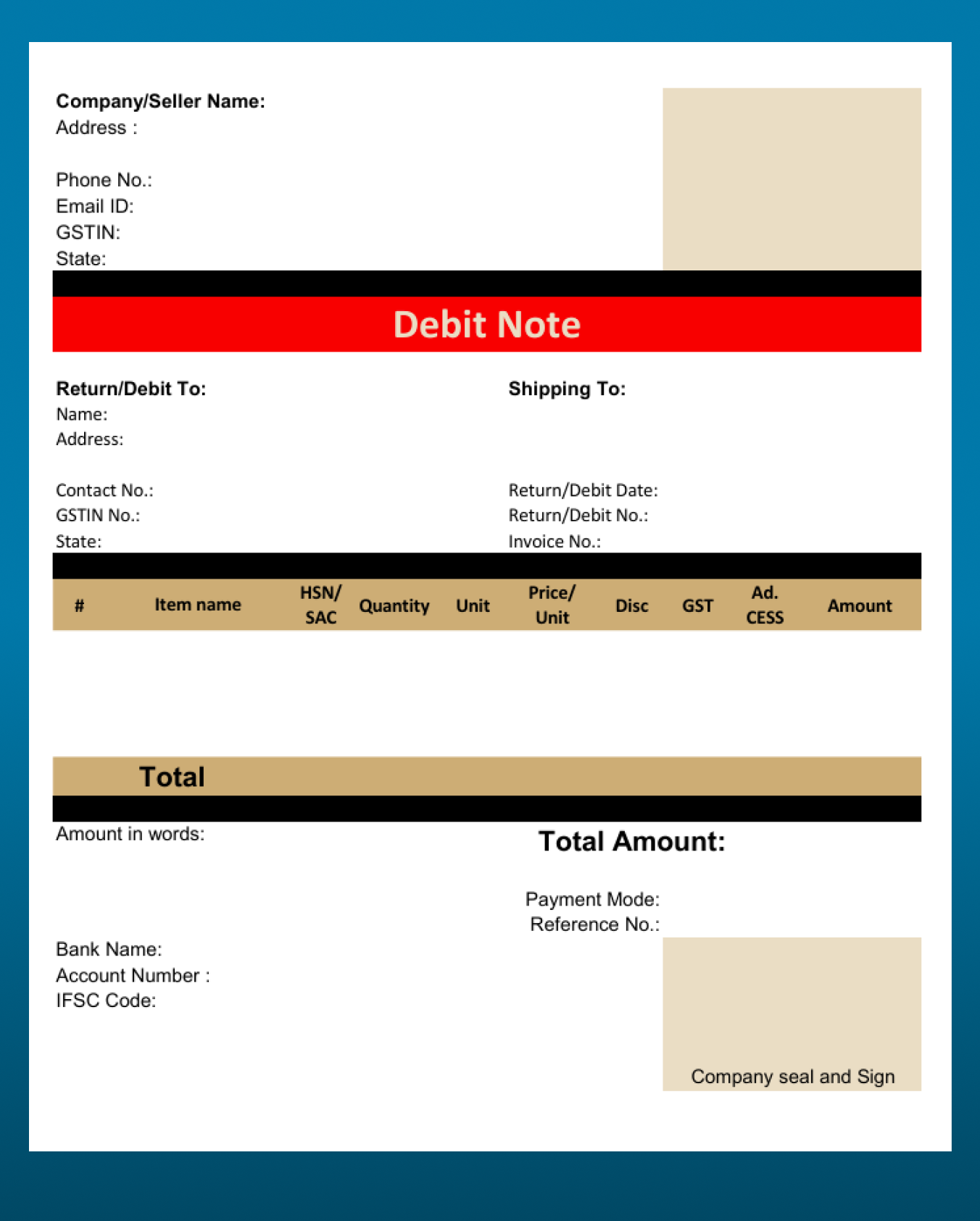
PDF-3
Skip Manual Format. Use Vyapar.
What is Debit Note Format in GST?
A debit note in GST format is a document issued by a seller to a buyer when the taxable value or GST charged in the original invoice needs to be increased. The format of debit note includes details such as invoice reference, GSTIN, tax rate, revised taxable value, and reason for issuing the debit note.
Businesses commonly use a debit note format in GST when there is:
- Underbilling in the original invoice
- Additional quantity supplied
- Increase in price after invoicing
- Tax short-charged in the original bill
Components of Debit Note Format in GST
Supplier & Buyer Details
Include supplier and buyer name, address, GSTIN, and state code to ensure proper GST compliance.
Debit Note Number & Date
Mention a unique debit note number, date of issue, and financial year for tracking and audit purposes.
Original Invoice Reference
Add original invoice number, date, and value to link the debit note with the initial transaction.
Revised Value & Adjustment
Clearly show revised taxable value, additional charges, and the difference amount being debited.
GST Rate & Tax Details
Include GST rate along with CGST, SGST, or IGST and total tax for accurate tax calculation.
Reason & Authorization
State the reason for issuing the debit note and include authorized signature for validity.
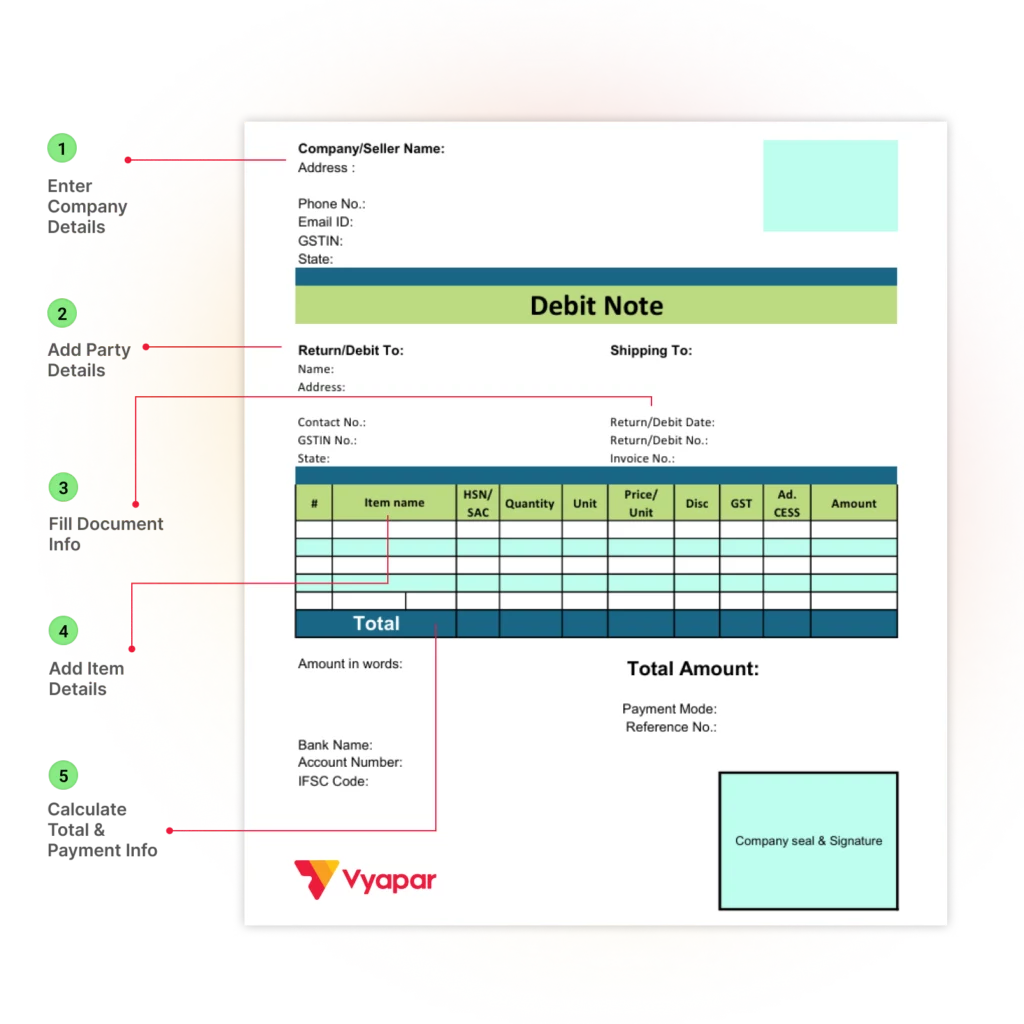
How to Create a Debit Note Format in GST
- Enter Company Details
Fill in the company/seller name, address, phone number, email ID, GSTIN, and state at the top. - Add Party Details
Enter “Return/Debit To” (customer details) and “Shipping To” information, including address and contact details. - Fill Document Info
Mention return/debit date, debit note number, and invoice number. - Add Item Details
List items with HSN/SAC, quantity, unit, price, discount, GST, cess, and calculate the amount. - Calculate Total & Payment Info
Add total amount, write it in words, and fill payment mode, reference number, and bank details.
Advantages of Debit Note Format in GST
- Accurate GST Adjustment & Tax Correction: A properly structured debit note format in GST Excel ensures that any increase in taxable value or tax amount is calculated correctly.It clearly reflects revised GST amounts (CGST, SGST, or IGST), helping businesses update their GST returns accurately and avoid tax mismatches.
- Improved GST Compliance: A legally compliant debit note format in GST PDF helps businesses follow GST rules while increasing invoice value.When prepared correctly, the debit note supports proper reporting in GSTR-1 and ensures transparency during GST audits or departmental verification.
- Professional Documentation & Audit Readiness: Using a standardised template for GST in PDF creates clean, professional, and printable records.This improves documentation quality and ensures that all debit adjustments are properly recorded for internal audits and statutory compliance.
- Simplified Accounting & Reconciliation: A well-designed debit note GST format in Excel helps maintain accurate books of accounts.It simplifies reconciliation between supplier and buyer records, reduces disputes, and ensures smooth adjustment of outstanding balances.
- Error Reduction & Better Financial Control: Automated formulas in a debit note format in GST in Excel reduce manual calculation errors in taxable value and GST amount.This improves financial control, prevents under-reporting or over-reporting of tax, and enhances overall accounting accuracy.
Importance of Debit Note Format in GST
- Ensures Correct Tax Liability Adjustment: A standardized debit note GST format in Excel helps businesses revise taxable value and GST amounts accurately. This prevents underreporting or mismatched tax figures in GST filings.
- Helps in Accurate GST Return Filing: When businesses use a proper format of PDF or Excel, the updated values can be correctly reflected in GSTR-1 and other returns. This reduces the chances of reconciliation issues.
- Maintains Proper Documentation: A clear debit note template in GST includes invoice reference, GSTIN details, tax breakdown, and reason for the issue. This ensures complete documentation for audits and internal record-keeping.
- Prevents Legal and Financial Penalties: Incorrect tax adjustments can lead to notices or penalties. Using a structured debit note format under GST in Excel ensures compliance with GST rules and minimizes legal risks.
- Improves Accounting Transparency: A well-designed template for GST in Excel helps businesses maintain clarity between original invoice values and revised amounts, making reconciliation easier for both buyer and seller.
Ready to Manage Your Business Like a Pro!
Other Valuable Features of The Vyapar App
Inventory Management with Stock Tracking
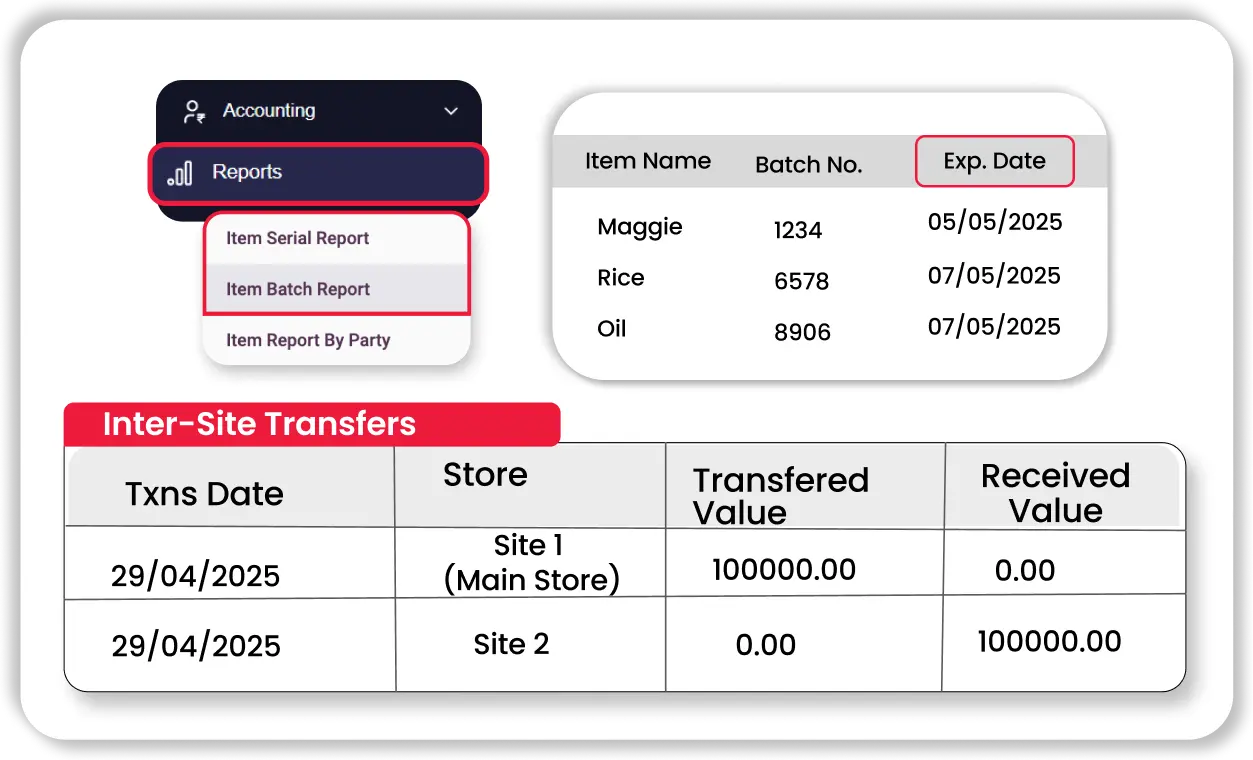
Inventory Management with Stock Tracking
Vyapar helps you manage inventory efficiently by tracking stock levels in real time. You can monitor product availability, set low-stock alerts, and avoid overstocking or stockouts. This ensures better inventory control and smooth business operations.
GST Billing and Invoicing

GST Billing and Invoicing
Create GST-compliant invoices, debit notes, and credit notes instantly. Vyapar automatically calculates CGST, SGST, and IGST, reducing manual errors and ensuring accurate tax reporting. It simplifies billing for both retail and wholesale businesses.
Business Reports and Financial Insights

Business Reports and Financial Insights
Accounting and Financial ReportsVyapar automatically generates Profit and Loss statements, Balance Sheets, GST reports, and cash flow summaries. These reports provide clear financial insights for better decision-making and business growth.
Expense and Purchase Management
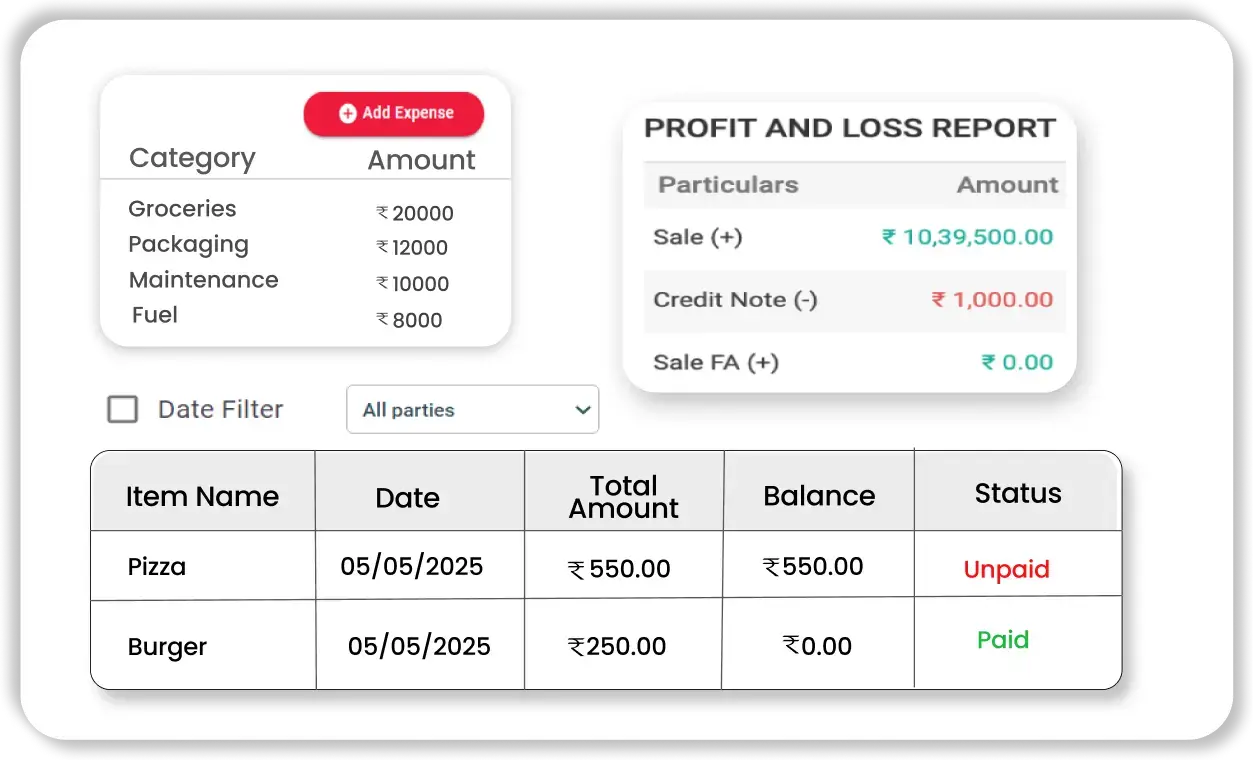
Expense and Purchase Management
Record daily expenses and manage purchase transactions efficiently. The app helps track supplier payments, outstanding dues, and overall cash flow for improved financial control.
Data Backup and Security
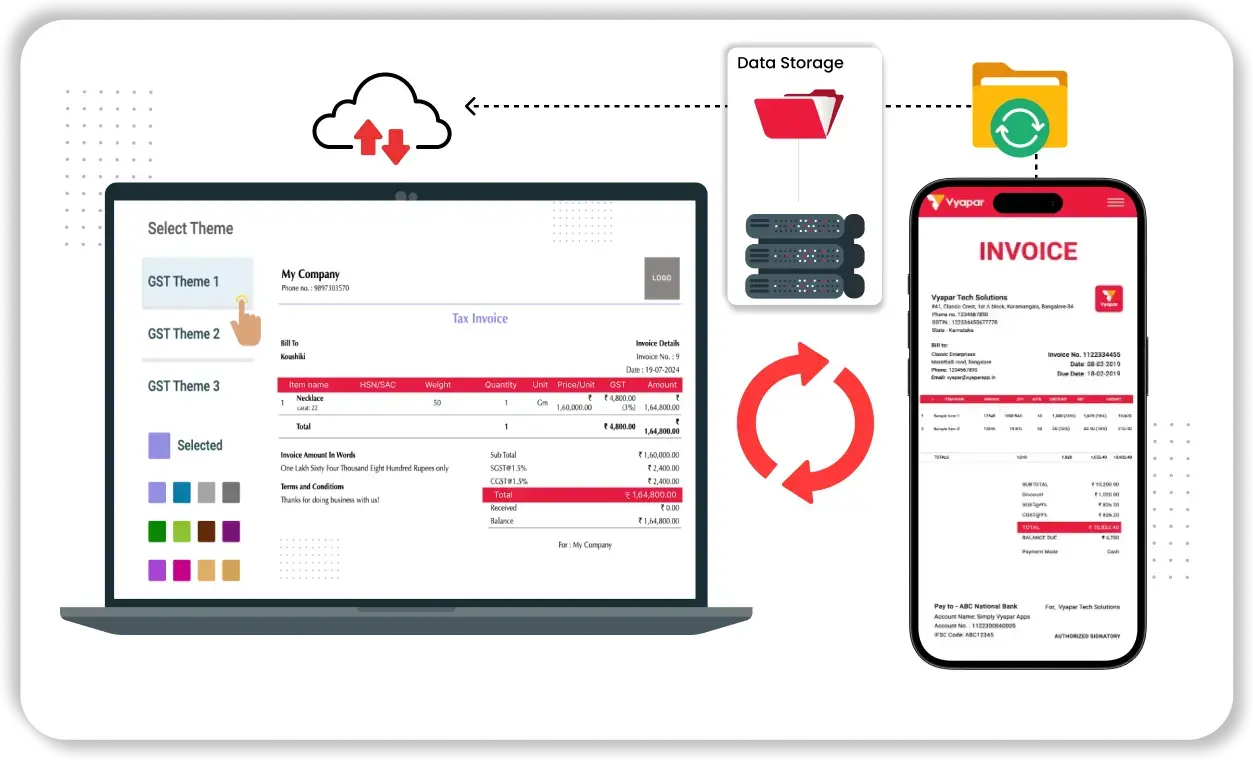
Data Backup and Security
Your business data is securely stored with automatic backup options. Vyapar ensures data safety and allows easy restoration, protecting important financial records from loss or system failure


Get a Free Demo
Frequently Asked Questions (FAQ’s)
A proper format of debit note in GST must include supplier and buyer GSTIN, debit note number and date, original invoice reference, revised taxable value, GST rate (CGST/SGST/IGST), and total amount.
Yes, you can use a format in Excel for easy calculation and tax breakup. Many businesses prefer a GST debit note format in Excel download for customization and automation.
Yes, a properly structured format in a Pdf is valid for documentation and audit purposes, provided it contains all mandatory GST details.
A debit note and credit note format in GST serve opposite purposes. A debit note increases
Yes, businesses not registered under GST can use a debit note format in Excel without GST, which excludes tax fields but still records adjustments properly.
A structured template in GST ensures accurate tax adjustment, proper record-keeping, and smooth GST return filing without errors.
A debit note format in GST helps businesses legally increase invoice value while ensuring accurate tax adjustment and GST compliance. It improves record-keeping, reduces calculation errors, and supports smooth GST return filing.
Under the GST regime, debit notes help in adjusting the taxable value and tax charged on the original supply. This ensures accurate tax reporting and compliance with GST laws, facilitating proper calculation of CGST, SGST, and IGST as per the GSTN system
A debit note, also known as a debit memo, is issued from a buyer to their seller to request a return of funds due to incorrect or damaged goods, purchase cancellation, or other specified circumstances.
Did not find what you were looking for?


Billing software in India for small businesses


Unlock These Premium Themes in Vyapar App
Enter Your Details to Start Download
Billing software in India for small businesses


