Dead stock is inventory that has remained unsold for an extended period and is unlikely to sell
It ties up working capital, wastes storage space, and quietly erodes profit margins
Common causes include overordering, poor demand forecasting, and seasonal misjudgment
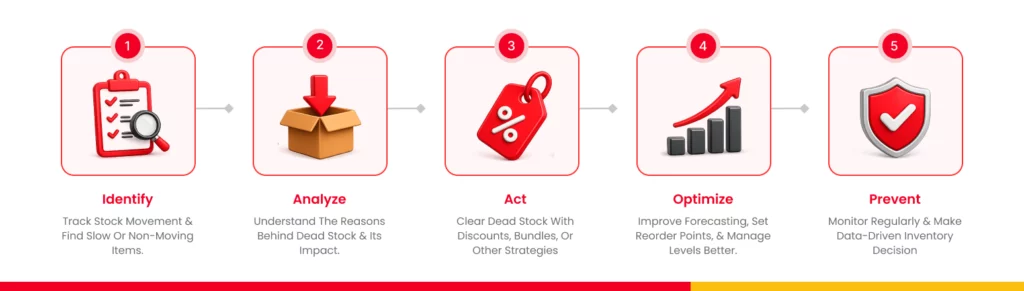
You can clear dead stock through discounts, bundling, liquidation, and stock transfers
Prevention is always cheaper than cure – track inventory movement regularly and order based on data
Introduction
You ordered 200 units of a product expecting strong demand. Three months later, 150 units are still sitting on your shelf, untouched. No one is asking for them, and it does not look like that will change anytime soon.
That is dead stock. It is one of the most common and quietly damaging problems in inventory management. Every unsold unit represents locked cash, wasted space, and a margin slowly going to zero.
This guide explains what dead stock is, what causes it, how to clear it when it happens, and most importantly how to prevent it from building up in the first place.
What is Dead Stock?
Dead stock refers to inventory that has remained unsold for a prolonged period, typically six to twelve months, and is no longer expected to sell under normal conditions. These are products that once looked like good investments but have since lost demand due to changing customer preferences, seasonal shifts, or product obsolescence. In inventory management, identifying these items early is the difference between a small write-off and a major cash flow problem.
Dead stock is NOT the same as:
Slow-moving stock: Items that still sell, just at a slower rate than expected
Seasonal inventory: Products temporarily out of demand but expected to sell again next season
Returned goods: Items sent back by customers that may still be resalable
The distinction matters because your response to each is different. A winter jacket in July is seasonal. A winter jacket with a discontinued design from two years ago is dead stock.
Why Dead Stock Hurts Your Business
The damage from dead stock is not always obvious, but it compounds over time:
Impact
How It Hurts
Locked working capital
Cash stuck in unsold goods cannot fund new, fast-selling inventory
Storage costs
Dead stock occupies warehouse or shelf space you are paying rent on
Lower profit margins
Eventually sold at deep discounts, if at all, far below the purchase cost
Inaccurate data
Skews inventory reports, turnover ratios, and demand forecasts
Missed opportunity
Space and capital used on dead stock could have been used for products that actually sell
For a small retailer, even ₹50,000 locked up in dead inventory can impact the ability to restock bestsellers during peak season.
Common Causes of Dead Stock
Most dead stock can be traced back to a few repeating patterns:
Overordering: Buying in bulk to chase volume discounts without verifying real demand
Poor demand forecasting: Guessing instead of using actual sales data to plan purchases
Seasonal misjudgement: Stocking festival or weather-specific items without planning an exit strategy
Product obsolescence: New models, styles, or technology making older versions irrelevant
Lack of inventory visibility: Not knowing what is selling, what is slowing, and what has stopped moving entirely
Waiting for a year-end audit to discover dead stock is too late. Build these habits instead:
Track your inventory turnover ratio regularly. A declining ratio means stock is sitting longer. Formula: Inventory Turnover = COGS ÷ Average Inventory.
Run aging reports to see how long each product has been in stock. Anything unsold beyond 90–180 days needs attention.
Flag zero-movement SKUs monthly. No sales for 60 days? Investigate before it crosses into dead stock territory.
Compare stock levels with sales velocity. A product selling two units a month but sitting at 200 units is a red flag.
6 Ways to Clear Dead Stock
When dead stock has already built up, act fast. The longer unsold inventory sits, the less value you can recover.
1. Run a clearance sale Discount dead stock aggressively. Recovering 50% of cost is better than recovering nothing and continuing to pay storage costs.
2. Bundle with fast sellers Pair dead stock with popular products as a combo offer. Customers see value, and you move stagnant inventory without slashing prices on your bestsellers.
3. Return to the supplier If your supplier agreement allows returns or exchanges, this is the cleanest exit. Negotiate before the return window closes.
4. Donate for goodwill Donating unsold inventory reduces storage costs and builds community goodwill. Depending on the product, it may also offer tax-deductible benefits.
5. Liquidate through marketplaces List dead stock on online marketplaces or local deal platforms where bargain-hunters actively look for discounted products.
6. Repurpose or repackage Sometimes dead stock can be repackaged, relabeled, or repurposed into a different product category that has demand.
How to Prevent Dead Stock From Building Up
Clearing dead stock is necessary, but good inventory management means preventing it in the first place. Here are practical habits that keep your shelves clean:
Order based on sales data, not gut feeling. Use past sales trends and seasonal patterns before placing purchase orders.
Start small with new products. Test a small batch before committing to a large order.
Dead stock is the silent profit killer in any product business. It does not announce itself – it quietly accumulates until you realize your working capital is locked in goods nobody wants. The good news is that with regular inventory reviews, data-driven purchasing, and quick action on slow movers, most dead stock is preventable. When it does show up, move fast with discounts, bundles, or liquidation rather than hoping demand returns. A good inventory software gives you visibility to spot problems early, so your cash stays in your business, not on a forgotten shelf.
Frequently Asked Questions (FAQs)
What is the difference between dead stock and slow-moving inventory?
Slow-moving inventory still sells, just at a slower rate than expected. Dead stock has no active demand and is unlikely to sell under normal conditions. Good inventory management helps you spot slow movers early, before they turn into dead stock.
How do I calculate the value of dead stock in my business?
Use this simple formula: Dead Stock Value = Total Unsold Units × Cost Per Unit. For example, if you have 300 unsold units that cost ₹100 each, your dead stock value is ₹30,000. This is capital that is locked and not generating any return.
After how many months does unsold inventory become dead stock?
There is no universal rule, but most businesses classify unsold inventory as dead stock if it has not moved for 6 to 12 months. For perishable goods or fashion items, the window can be as short as 60 to 90 days.
Can dead stock be written off for tax purposes?
Yes. If inventory has become obsolete, damaged, or unsaleable, you can write it off as a loss in your books. This reduces your taxable profit for the financial year. Consult your CA to ensure the write-off is documented correctly as per Income Tax rules.
How does inventory management software help prevent dead stock?
Inventory management software tracks stock movement in real time, flags zero-sale items, sends low-stock and aging alerts, and helps you set reorder points. This data-driven approach prevents overordering and ensures you always know what is selling and what is sitting idle.
Is it better to sell dead stock at a loss or hold it?
Almost always better to sell. Holding unsold inventory costs you storage rent, ties up working capital, and the product continues to lose value over time. Recovering even 30–50% of the cost through clearance sales or bundling is smarter than paying to store goods that will never sell at full price.
What is the dead stock formula?
The most common way to measure dead stock is: Dead Stock Percentage = (Value of Dead Stock ÷ Total Inventory Value) × 100. This tells you what share of your total inventory is non-performing and helps you benchmark improvement over time.
Vyapar Editorial Team represents the officially authorized content and review function at Vyapar App, a business management, billing and accounting software used by millions of SMEs. Articles published under this author are created and reviewed by subject-matter experts to ensure accuracy, compliance, and practical business value.
Introduction For any small business in India dealing with stock, dead inventory and stockouts are the two fastest ways to lose money. The right inventory management software for small business tracks every SKU in real time, alerts you before stock runs out, handles GST and e-way bills, and shows which items are actually making you…
Introduction As we have seen, the general store is a very needful and economical household business shop. Containing items like Kirana items, clothes, small electrical items, and medicines, etc. Here you will find the vast no of category items. Knowing the inventory of the items, judging the customer demand, maintaining party outstanding, tracking history, and…
Introduction As we have seen, Vehicles are in the long term use and long-running machines. They need the services and sometimes replacement of the spare parts, which depends on the use case as well as wear and tear of the items. There is a vast number of companies, models, designs and customized models are available….