Introduction to Sundry Debtors and Creditors: Meaning, Differences and Examples

KEY TAKEAWAYS
- Sundry debtors are customers who owe money to your business for goods or services sold on credit
- Sundry creditors are suppliers or vendors to whom your business owes money for goods or services bought on credit
- Sundry debtors appear on the assets side of the balance sheet
- Sundry creditors appear on the liabilities side of the balance sheet
- Managing both effectively is critical for healthy cash flow and working capital
Introduction
Almost every Indian business, from a small kirana shop to a mid-sized wholesaler, runs partly on credit. You buy stock from a supplier with an agreement to pay in 30 days. You sell goods to a regular customer who settles the bill at month-end. These simple credit arrangements create two entries in your books – sundry debtors and sundry creditors.
If these terms sound technical, they are just accounting names for people who owe you money and people you owe money to. Understanding them is the first step to managing your cash flow and reading your balance sheet.
This guide explains what sundry debtors and creditors mean, how they differ, where they sit on the balance sheet, and why they matter.
What are Sundry Debtors?
“What are sundry debtors?” Sundry debtors are individuals, businesses, or entities that owe money to your business for goods or services you have supplied on credit. The word “sundry” simply means various or miscellaneous – these are the many different customers or parties who buy from you without paying immediately.
For example, if Surabhi Enterprises sells steel rods worth ₹50,000 to Orion Builders on a 30-day credit period, Orion Builders becomes a sundry debtor in Surabhi’s books until the payment is received.
Key points about sundry debtors:
- They are also known as accounts receivable or trade debtors
- They represent money the business expects to receive
- They are recorded as an asset on the balance sheet
- They directly impact your cash flow and working capital
Check Out the – Debtors Account Format for Your Business
What are Sundry Creditors?
Sundry creditors are the opposite side of the same transaction. They are individuals, suppliers, or vendors to whom your business owes money for goods or services you have purchased on credit.
Continuing the earlier example, from Orion Builders’ point of view, Surabhi Enterprises is a sundry creditor because Orion owes Surabhi ₹50,000 until the payment is made.
Key points about sundry creditors:
- They are also known as accounts payable, trade creditors, or bills payable
- They represent money the business is obligated to pay
- They are recorded as a liability on the balance sheet
- They affect your short-term payment obligations
Sundry Debtors vs Sundry Creditors: Key Differences
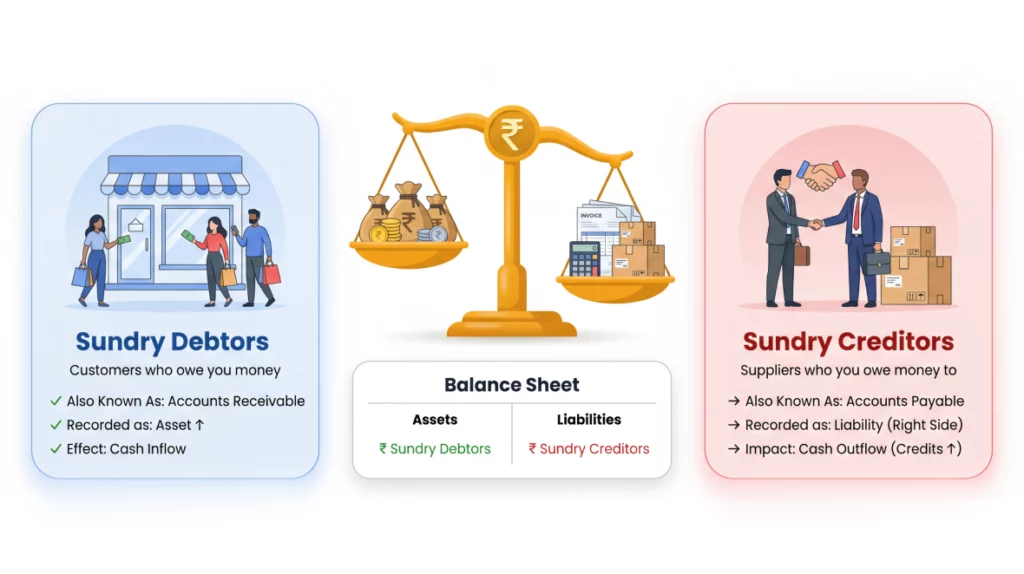
Here is the cleanest way to see how the two differ:
| Basis | Sundry Debtors | Sundry Creditors |
| Meaning | Parties who owe money to the business | Parties to whom the business owes money |
| Nature | Asset | Liability |
| Balance sheet side | Assets (left/debit side) | Liabilities (right/credit side) |
| Arises from | Credit sales | Credit purchases |
| Also known as | Accounts receivable | Accounts payable |
| Impact on cash flow | Delays cash inflow | Delays cash outflow |
| Provision required | Provision for doubtful debts needed | No such provision needed |
How They Appear in the Balance Sheet
On a standard balance sheet:
- Sundry debtors sit under Current Assets, because you expect to collect the money within 12 months
- Sundry creditors sit under Current Liabilities, because you expect to pay them within 12 months
A simple illustration for a trading business:
| Balance Sheet Item | Amount (₹) |
| Assets | |
| Cash in hand | 50,000 |
| Sundry Debtors | 200,000 |
| Closing Stock | 300,000 |
| Liabilities | |
| Sundry Creditors | 150,000 |
| Short-term loans | 100,000 |
In this example, the business is owed ₹200,000 by its customers, while it owes ₹150,000 to its suppliers.
Examples of Sundry Debtors and Creditors
Sundry debtors typically include:
- Retail customers who buy goods on credit
- Wholesale buyers with agreed credit periods
- Government departments that pay after invoice verification
- Other businesses that purchase your products on credit terms
Sundry creditors typically include:
- Raw material suppliers
- Wholesalers who supply finished goods
- Service providers (printers, packaging vendors, logistics partners)
- Utility and infrastructure vendors billed monthly
Why Sundry Debtors and Creditors Matter
Tracking these two accounts well is not just about clean books. It affects real business outcomes:
- Cash flow management: High debtors with low creditors means your money is stuck with customers
- Working capital health: A healthy balance between the two keeps your operations smooth
- Credit control: Knowing who owes you and for how long helps you chase overdue payments on time
- Supplier relationships: Paying creditors on time builds trust and often unlocks early-payment discounts
- Bad debt risk: Long-overdue debtors often turn into bad debts, eating into your profit
A useful metric to watch is Debtor Days – the average number of days it takes to collect from customers. Lower is better.
Check Out the – Total Creditors Account Format for Your Business
Tips to Manage Sundry Debtors and Creditors Efficiently
- Set clear credit terms with every customer before making a sale
- Send payment reminders via WhatsApp, SMS, or email as due dates approach
- Reconcile debtor and creditor ledgers every month
- Negotiate longer credit periods with suppliers where possible
- Take advantage of early-payment discounts from creditors when cash allows
- Use billing and accounting software to track every credit transaction automatically
Conclusion
Sundry debtors and sundry creditors sit at the heart of every business that runs on credit. Debtors bring future cash into the business, while creditors give you short-term breathing room to buy stock and operate. The trick is to keep both in balance – collect from debtors faster than you need to pay creditors. Do this well and your cash flow stays healthy, your suppliers stay happy, and your balance sheet tells the right story. A good accounting software for small businesses makes tracking both ledgers effortless, so you always know who owes you and whom you owe at any point in time.
Frequently Asked Questions (FAQs)
What are sundry debtors and sundry creditors in accounting?
Sundry debtors are individuals or businesses who owe money to a company for goods or services sold on credit. Sundry creditors are those to whom the company owes money for purchases made on credit.
What are sundry debtors and creditors?
Sundry debtors refer to customers who have pending payments with the business, while sundry creditors are suppliers or vendors to whom the business has outstanding dues.
Are sundry debtors an asset or liability?
Sundry debtors are considered a current asset because they represent money that will be received by the business in the future.
Is a sundry debtor a debit or credit?
Sundry debtors have a debit balance in accounting, as they reflect amounts receivable by the business.
Where do debtors and creditors appear in the balance sheet?
Sundry debtors appear under current assets, while sundry creditors are shown under current liabilities in the balance sheet.