In business transactions, two documents appear in almost every deal: the purchase order and the invoice. They look similar, both involve numbers, and both connect buyers and sellers. But the truth is, they serve completely different purposes. A purchase order is created by the buyer to formally request goods or services at agreed terms. An invoice comes later from the seller, asking for payment once those goods or services have actually been delivered. If you’re running a business, even a small shop, knowing this difference is not optional. It’s like knowing the difference between ordering food and getting the bill afterwards
Understanding purchase order vs invoice keeps payments smooth, avoids messy disputes, strengthens internal control, and makes accounting far cleaner. If you’re running a business, even a small shop, knowing this difference is not optional. This guide breaks down what a purchase order really is, what an invoice is, how a sales invoice differs from a purchase invoice, and why the PO number is such a big deal in every organisation.
What Is a Purchase Order?
Let’s start with the buyer’s side.
A purchase order, often called a PO, is a formal request sent by a buyer to a supplier before any goods or services are delivered. It’s not a payment, and it’s not a bill. It’s simply the buyer saying: Here’s exactly what I want, in this quantity, at this price, delivered on this date.
Using the best accounting software, you can easily create and manage purchase orders without manual errors.
Think of it like placing an online order on Amazon. You click “Buy Now,” choose quantity, view the price, select the address, and confirm. That order confirmation page? That’s basically your purchase order.
A simple example:
Imagine you run a small café. You need 10 kg of coffee beans every month. You message your supplier and say, “Send me 10 kg next Monday.” If you keep doing this informally, sooner or later, someone will get the quantity, date, or price wrong.
A purchase order solves this.
You send a document that clearly mentions:
Coffee beans – 10 kg
Price per kg
Total amount
Delivery date
Payment terms
Shipping location
Your signature/authorisation
A unique PO number
This PO becomes the official record of what you ordered.
What a PO usually contains:
Item descriptions
Quantities
Unit prices
Delivery timeline
Billing and shipping details
Terms and conditions
A unique PO number
Each part exists so the supplier knows exactly what to send, and you know exactly what to expect. If anything goes wrong, the PO is your proof.
Why the PO number matters so much
That tiny PO number is the backbone of the whole transaction. It helps both sides:
Track the order
Match delivery vs request
Access past orders quickly
Resolve disputes
Pass audits
Record entries cleanly in accounting
In software like Vyapar, the PO number becomes the anchor that connects your order, delivery, and payments, so nothing gets lost.
What Is an Invoice?
Now flip to the seller’s side.
When people ask “what is an invoice,” they’re looking for the document a seller issues after supplying goods or services.
The simplest definition is: An invoice is the seller’s official bill that asks the buyer to pay for what’s been delivered.
It’s the business version of the bill your waiter brings after you finish your meal.
A simple example:
Let’s go back to the café. You placed a PO for 10 kg of coffee beans. The supplier sends the beans on Monday, as promised.
Along with the delivery, they attach a document that says:
Coffee beans delivered: 10 kg
Price per kg
Taxes
Final total
Payment due date
Reference: Café’s PO number
Supplier’s invoice number
This is the invoice. You now owe them money based on it.
What an invoice usually contains:
Details of the goods delivered
Quantity and pricing
Taxes
Total amount due
Payment terms (7 days, 30 days, immediate, etc.)
Supplier’s invoice number
Reference to the buyer’s PO number
Every business depends on these details to track who owes what.
Types of Invoices: Sales vs Purchase Invoice
Even though the word “invoice” is the same, the perspective changes depending on who is looking at it.
1. Sales Invoice
Issued by the seller
Purpose: To claim payment
For the seller, this is revenue.
2. Purchase Invoice
Received by the buyer
Purpose: To record expenses
For the buyer, this is a cost.
A quick way to understand:
If you’re sending the invoice → it’s a sales invoice
If you’re receiving the invoice → it’s a purchase invoice
Same document. Two viewpoints. Two different roles in accounting.
Purchase Order vs Invoice: The Core Difference
Let’s boil it down to the simplest form:
A purchase order is created by the buyer before the transaction.
An invoice is created by the seller after completing the transaction.
They flow in opposite directions.
One authorizes a purchase.
The other demands payment.
Document Flow Table
Document
Created By
Sent To
Purpose
Purchase Order
Buyer
Seller
To request and authorise the purchase
Invoice
Seller
Buyer
To request payment and acts as proof of delivery.
Both documents remain connected through the PO number, ensuring everything matches from start to finish.
How Purchase Orders and Invoices Work Together
Here’s how the whole cycle plays out in real life:
Buyer creates a purchase order – A unique PO number is generated.
Seller ships goods or delivers services – They refer to the buyer’s PO.
Seller issues a sales invoice – This becomes the buyer’s purchase invoice.
Buyer verifies invoice vs PO – Did the seller send what was ordered?
Three-way match step
PO
Delivery note
Invoice
Payment is made – Only after everything matches.
It’s a simple system that prevents confusion and keeps accounting accurate. A tool like Vyapar makes this cycle easier because it keeps the PO, invoice, and stock all tied together.
Why Businesses Use Purchase Orders
Some people feel PO systems are only for large organisations. That’s not true at all. Even a home-based business benefits from POs because they:
Reduce misunderstandings
Create documented proof of every order
Prevent unauthorised purchases
Track expenses cleanly
Make audits smoother
Help manage budgets
A relatable example:
Say you run a small garment shop and regularly buy fabric from a wholesaler. If you keep ordering verbally – “Send me 50 meters of blue fabric…” Sooner or later, someone will mishear it as “15 meters,” or you’ll forget what price you agreed on, or the supplier will assume the last rate still applies. A PO fixes all of this.
Everything is written, dated, and acknowledged. No surprises. No arguments.
Why Invoices Are Critical
Invoices aren’t just bills. They serve several essential functions:
They create a legal obligation for payment
They help sellers track receivables
They help buyers record expenses
They support GST, tax filing, and audits
They help maintain clean accounts and cash flow
A relatable example:
Your café receives milk packets daily. The supplier gives you a monthly consolidated invoice. Without it, you wouldn’t even know exactly how much you owe or what quantity you actually received in that month.
The invoice becomes the backbone of your month-end accounting.
Purchase Order and Invoice Matching – Why It Matters?
When the PO and invoice don’t match, the trouble begins:
Payments get delayed
Suppliers follow up repeatedly
Stock mismatches happen
Account books show wrong entries
Disputes rise
This is why companies rely on the three-way match before clearing any payment.
The PO number is the link that ties everything:
What was ordered
What was delivered
What is being billed
When your system automatically matches these (like Vyapar does), life becomes much easier.
Key Differences At a Glance
Here’s a quick snapshot:
Concept
Purchase Order
Invoice
Created By
Buyer
Seller
Created When
Before goods/services arrive
After goods/services arrive
Purpose
To authorise a purchase
To request payment
Uses
Budgeting, approvals, and procurement control
Accounting, payment tracking
Contains
PO number, items, quantities, pricing
Invoice number, taxes, amount payable
Document Type
Contract of intent
Payment request
How Software Like Vyapar Helps
You don’t need fancy ERP software to manage POs and invoices. Even small and mid-sized businesses today prefer simple tools that:
Create POs instantly
Convert POs to invoices in one click
Match stock automatically
Keep supplier and customer records clean
Help during audits
Track payments
Avoid duplicate purchases
Maintain clean GST reporting
Vyapar fits naturally here because it’s built around the everyday workflow of Indian businesses. It connects POs, delivery challans, invoices, payments, and stock all in one place without complicating things.
You don’t feel like you’re using “software.” It simply becomes part of your daily routine.
Conclusion
Purchase orders and invoices may look similar, but they play very different roles. A purchase order is created before the transaction to authorise and document what the buyer wants. An invoice comes after the transaction to request payment for what was delivered.
Understanding the difference between them avoids confusion, improves communication, strengthens financial records, and keeps cash flow predictable. Whether you’re a small shop, a freelancer, a manufacturer, or a service provider, getting your PO-invoice cycle right is key to running a smooth business.
And if you use a system that links everything with a clean PO number, as tools like Vyapar do, the entire process stays transparent and hassle-free, from ordering to payment.
Frequently Asked Questions (FAQs)
Do you always need a purchase order for every transaction?
Not always. Very small or one-time purchases may be done informally, but POs are recommended when quantities, pricing, or approvals matter.
Can a supplier reject a purchase order?
Yes. A PO isn’t a contract until the supplier accepts it. They can decline or negotiate terms before confirming.
What happens if the invoice amount doesn’t match the PO?
The buyer usually holds the payment, investigates the mismatch, and resolves it with the supplier before processing.
Can a PO be cancelled or changed after it’s issued?
Yes, if the supplier hasn’t started work or shipped goods. Updated POs or amendments are commonly issued.
Is digital documentation accepted for POs and invoices?
Absolutely. Digital POs and invoices are now standard and fully valid, especially when managed through tools like Vyapar.
I'm a Chartered Accountant with 13+ years of experience in finance, taxation, and MSME consulting. I worked with leading industries and with the Vyapar Group, helping businesses simplify their accounting and financial operations.
Designation: Chartered Accountant, FCA
Membership Number (MRN): 418428
City: Raipur, C.G
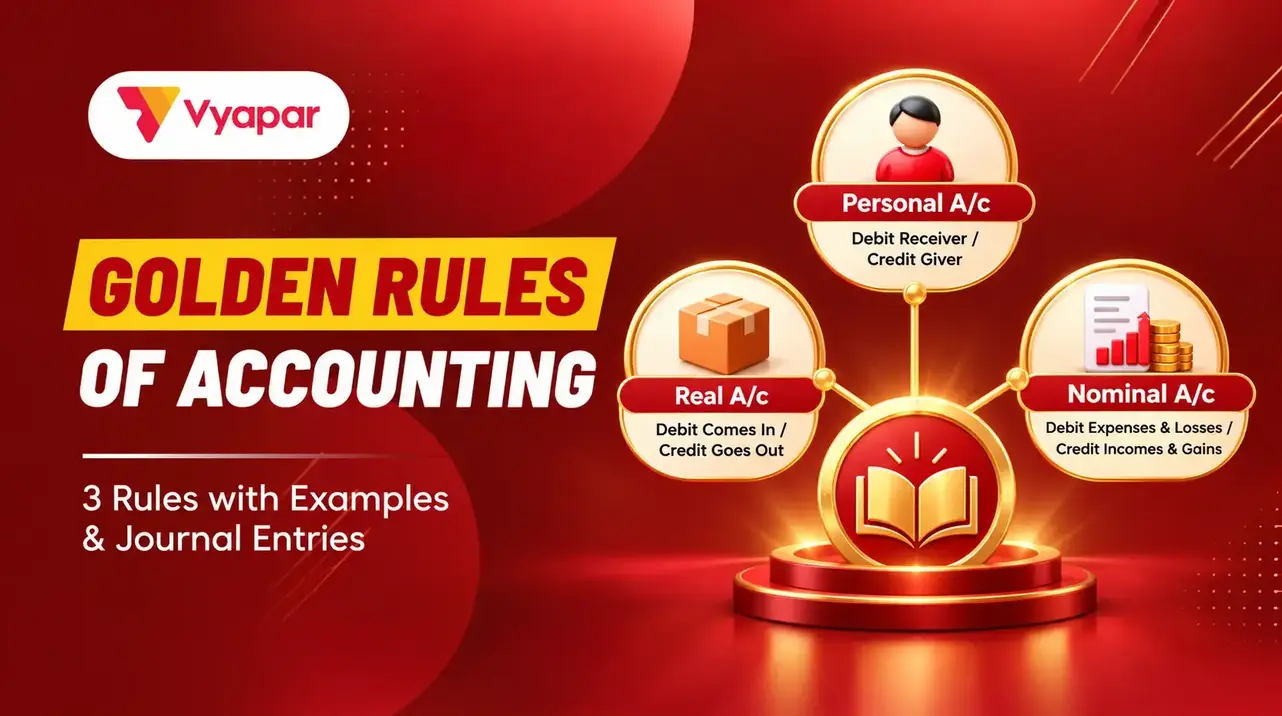
KEY TAKEAWAYS The 3 Golden Rules: They help decide which account to debit and which to credit. Know the Account Types: Identify whether an account is Personal, Real, or Nominal before applying the rule. Every Transaction Has Two Sides: Each transaction affects at least two accounts through debit and credit. Apply Them to Daily Transactions:…
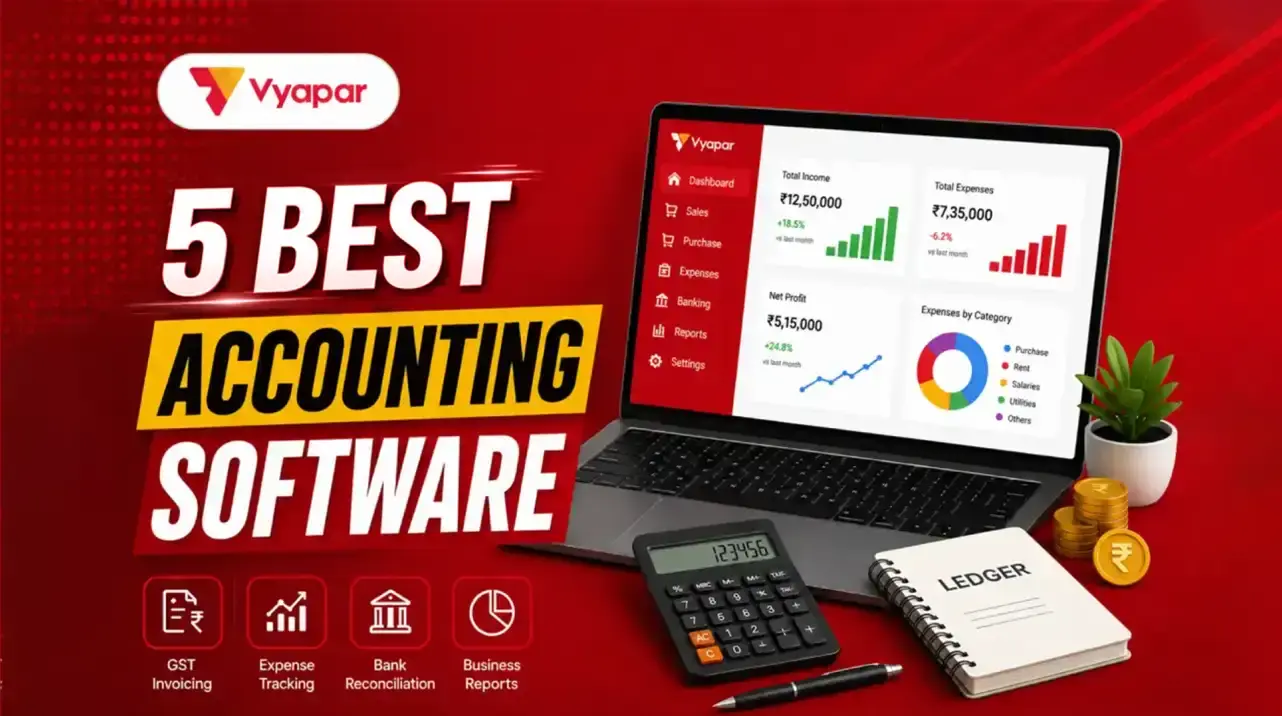
Introduction Retail businesses today need much more than basic bookkeeping. Between GST compliance, inventory valuation, expense tracking, profit monitoring, vendor payments, and daily sales reconciliation, managing finances has become increasingly complex.. To help retailers choose the right solution, I’ve compared five of the most popular accounting software options in India based on ease of use,…
Introduction Running a small business in India in 2026 means going through GST returns, e-invoicing, e-way bills, inventory, and daily bookkeeping, usually without a full-time accountant. The right GST accounting software for small business automates the heavy lifting and frees you to focus on growth. We’ve compared the five most widely used names in India,…