As the financial year draws to a close, many business owners feel they’ve missed the window for tax planning. In reality, there’s still time to make a few smart financial decisions before March 31 that can reduce your tax liability for FY 2025-26.
For SMEs, proprietors, and professionals, year-end tax planning isn’t about complicated strategies. It’s about making the most of available deductions, timely investments, and properly recording business expenses.
Here’s what you can still do before the financial year closes.
Can You Save Tax at the Last Minute?
Yes, business owners can still save on taxes by making eligible financial decisions before March 31, such as recording allowable business expenses, purchasing assets for depreciation, clearing statutory payments, and making tax-saving investments where applicable.
Income tax provisions allow tax reduction through:
Business expenses
Depreciation on assets
Insurance payments
Retirement contributions
Eligible investments (depending on the tax regime chosen)
Even decisions taken in the final weeks of March can help reduce taxable income for FY 2025-26.
The key is to focus on expenses, payments, and investments that are recognized within the financial year, ensuring they are properly recorded in the books before closing.
Top 5 Strategies to Reduce Tax Liability
Here are five practical tax-saving strategies business owners can use before March 31.
1. Maximize Section 80C Investments (PPF, ELSS)
Section 80C allows deductions of up to ₹1.5 lakh from taxable income.
Popular options include:
Public Provident Fund (PPF)
ELSS mutual funds
Life insurance premium
Principal repayment of the home loan
Tax-saving fixed deposits
For business owners who haven’t yet used this limit, investing before March 31 can immediately reduce taxable income.
Example
Investment
Amount (₹)
ELSS
70,000
PPF
50,000
LIC Premium
30,000
Total Deduction
1,50,000
This deduction directly reduces tax liability.
2. Purchase Business Assets (Depreciation Benefit)
Buying business assets before March 31 allows you to claim depreciation in FY 2025-26.
If an asset is purchased and put to use for less than 180 days in the financial year, only 50% of the depreciation can be claimed.
Example:
Computer purchased in February—Depreciation = 20% instead of 40%
Machinery purchased in January – Depreciation = 7.5% instead of 15%
Even if assets are purchased late in March, depreciation can still be claimed as per applicable rules.
Depreciation Illustration
Asset
Cost (₹)
Rate
Depreciation (₹)
Laptop
80,000
40%
32,000
Office Furniture
50,000
10%
5,000
Depreciation reduces business profits and taxable income.
3. Health Insurance Premiums (Section 80D)
Section 80D allows deductions for health insurance premiums paid for:
Self
Spouse
Children
Parents
Covered Person
Maximum Deduction (₹)
Explanation
Self, Spouse, and Children
25,000
Premium paid for health insurance covering the taxpayer and immediate family qualifies for a deduction under Section 80D.
Parents (Senior Citizens)
50,000
Premium paid for health insurance of parents aged 60 years or above is eligible for a higher deduction limit.
This deduction is available even for proprietors and professionals. Paying premiums before March 31 ensures the deduction applies in FY 2025-26.
4. Pre-pay Business Expenses
Businesses following the mercantile system can record expenses incurred during the year. However, certain payments made before March 31 can still reduce taxable income.
Examples:
Office rent
Professional fees
Software subscriptions
Maintenance contracts
Internet and utility bills
Pre-paying legitimate business expenses reduces profit for the year and lowers tax liability. This strategy is commonly used by SMEs during year-end planning.
5. Contribute to NPS (National Pension System)
Business owners can claim deductions under:
Section 80CCD(1)
Section 80CCD(1B)
An additional deduction of ₹50,000 is available for NPS contributions. This deduction is over and above Section 80C.
Example Deduction Structure
Section
Limit (₹)
80C
1,50,000
80CCD(1B)
50,000
Total Possible Deduction
2,00,000
NPS contributions help reduce taxes while building retirement savings.
A critical compliance update for FY 2025-26 relates to payments made to MSMEs.
Under Section 43B(h), expenses payable to MSME vendors are allowed as deductions only if payment is made within the time limit specified under the MSME Act.
This means:
Payments must be made within 45 days (if an agreement exists)
Or within 15 days (if no agreement exists)
If payment is not made within this period:
The expense will not be allowed as a deduction in FY 2025-26.
It will be allowed only in the year of actual payment.
Illustration
Invoice Date
MSME Payment Due
Paid?
Deduction Allowed
Feb 10
March 27
Yes
FY 25-26
March 5
April 20
No
Next FY
This rule makes vendor payment tracking extremely important during year-end closing.
Businesses should review all MSME payables before March 31.
Conclusion
Tax planning doesn’t always have to start at the beginning of the financial year. Even in the final weeks before March 31, business owners can still take meaningful steps to reduce their tax liability for FY 2025-26.
Simple actions like recording pending expenses, purchasing business assets, clearing MSME dues, paying insurance premiums, or making retirement contributions can make a noticeable difference in taxable income. The goal isn’t just to save on tax but to ensure your books accurately reflect your business activity for the year.
Before closing the financial year, take a moment to review your accounts, outstanding payments, and eligible deductions. A little attention now can help you avoid missed opportunities, improve compliance, and start the next financial year with clean and well-prepared financial records.
Frequently Asked Questions (FAQs)
Can I reduce business tax after March 31?
No, most deductions must be completed within the financial year. After March 31, options become very limited.
Is buying assets in March useful for tax saving?
Yes, purchasing business assets allows depreciation claims, which reduces taxable profit for the year.
Can proprietors claim both business expenses and Section 80C deductions?
Yes, proprietors can claim business deductions as well as personal deductions like Section 80C and 80D.
Does paying vendors before March 31 reduce tax?
Yes, especially for MSME payments under Section 43B(h), where timely payment determines deduction eligibility.
Is NPS useful only for salaried individuals?
No, business owners and self-employed individuals can also contribute to NPS and claim deductions.
Varsha K Vijay is a finance professional with over five years of experience in accounting, GST compliance, and financial operations. She has cleared the CA Foundation and her work spans GST filing, TDS compliance, MIS reporting, and financial content writing.
KEY TAKEAWAYS GST 2.0 introduced a simplified tax structure with major slabs reduced to 0%, 5%, 18%, and 40% from 22 September 2025 The old 12% and 28% GST slabs were largely removed, with items shifted either to 5%, 18%, or 40% Daily essentials like soap, shampoo, butter, ghee, namkeen, notebooks, and insurance became significantly…
KEY TAKEAWAYS Section 44AD offers a presumptive taxation scheme for small businesses to simplify ITR filing Eligible businesses can declare 8% of turnover as income (6% for digital receipts) Turnover limit is ₹2 crore, or ₹3 crore if 95% of receipts are digital No need to maintain books of accounts or get a tax audit…
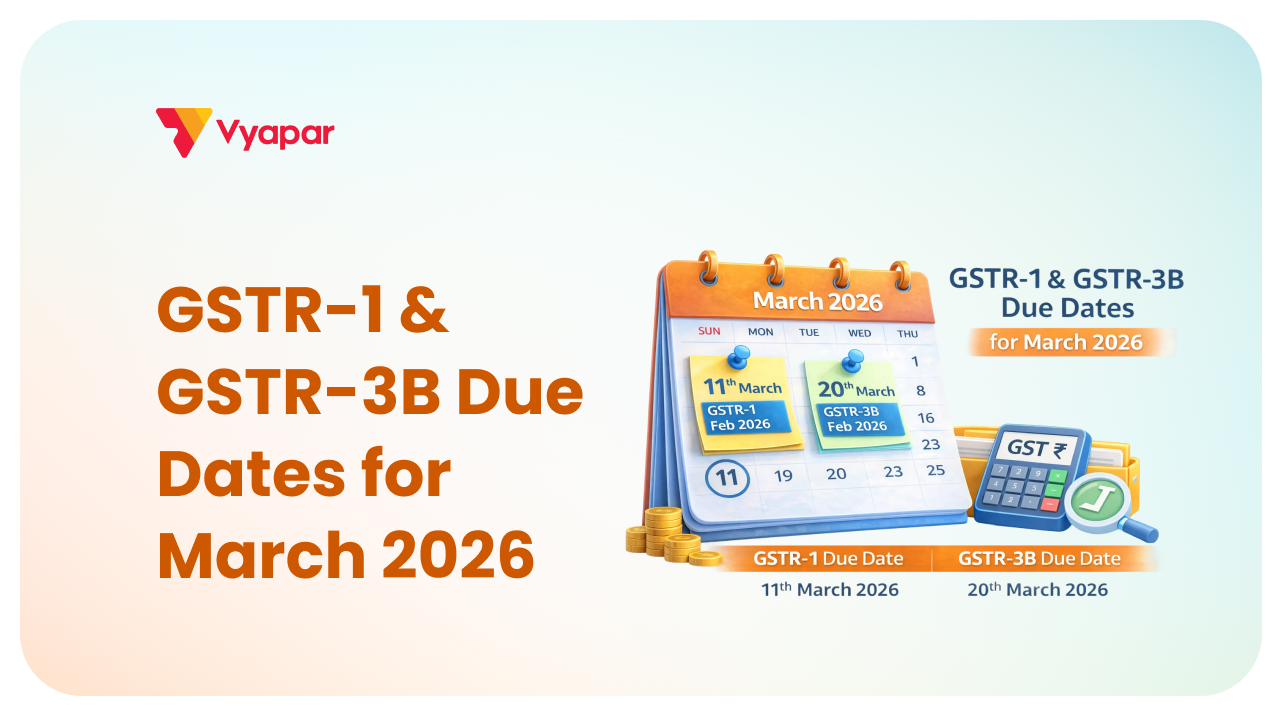
Introduction As the financial year comes to a close, March becomes one of the most important months for GST compliance. Businesses must ensure that their sales data, tax liability, and input tax credit records are properly reconciled before filing returns. Missing deadlines at this stage can create complications during year-end closing and reconciliation for FY…