Retail businesses are rapidly adopting digital technologies to improve efficiency and enhance customer experience. One of the most impactful innovations in modern retail is QR Code Billing. From small retail stores to large outlets, businesses are using QR-based solutions to simplify payments, speed up billing, and manage transactions more efficiently.
With the rise of QR payments and contactless transactions, retailers can now offer faster and more convenient checkout experiences. Modern retail billing software integrated with a QR code payment system allows businesses to generate QR bills, accept instant payments, and maintain accurate financial records.
In this article, we will explore how QR Code Billing is transforming retail businesses and why it is becoming an essential feature for modern retail management.
What is QR Code Billing?
QR Code Billing is a digital billing process where businesses generate a bill with a QR code that customers can scan to make instant payments using mobile payment apps.
Instead of paying through cash or manually entering payment details, customers simply scan the QR code and complete the transaction within seconds. The payment is automatically recorded in the retail billing software, reducing manual work and improving accuracy.
QR billing systems are widely used by:
Retail stores
Supermarkets
Pharmacies
Electronics shops
Restaurants and cafes
Service businesses
By integrating a QR code payment system, retailers can create a seamless billing and payment experience for customers.
Why Retail Businesses Are Adopting QR Code Billing
The demand for QR payments has increased significantly in recent years due to the growing use of smartphones and digital wallets. Customers prefer faster and contactless payment methods, which makes QR Code Billing an ideal solution for retail stores.
Some key reasons retailers are adopting QR billing systems include:
Faster checkout process
Reduced dependency on cash handling
Improved payment accuracy
Better transaction tracking
Enhanced customer convenience
Using retail billing software with QR payment capabilities allows businesses to manage billing and payments from a single platform.
Key Ways QR Code Billing is Transforming Retail Businesses
1. Faster Checkout and Improved Customer Experience
Long billing queues can frustrate customers and impact sales. QR Code Billing speeds up the checkout process by enabling customers to pay instantly.
With QR bills, customers simply scan the code and complete payment within seconds using their preferred payment app. This significantly reduces waiting time and improves overall customer satisfaction.
Faster billing also allows retailers to serve more customers during peak hours.
2. Contactless and Secure Payments
Modern customers prefer safe and contactless transactions. QR payments eliminate the need to exchange cash or swipe cards.
A QR code payment system ensures secure digital payments and reduces physical contact during transactions. This payment method also minimizes the risk of errors that may occur during manual payment entry.
As a result, retailers can provide a safer and more reliable payment experience.
3. Accurate Transaction Records
Manual billing often leads to errors in recording payments and maintaining accounts. Retail billing software integrated with QR billing automatically records every transaction.
This helps retailers:
Track daily sales
Maintain accurate financial records
Monitor payment status
Reduce accounting errors
Automated transaction tracking improves transparency and simplifies business accounting.
4. Better Cash Flow Management
One of the biggest advantages of QR Code Billing is instant payment confirmation. When customers make QR payments, the amount is transferred directly to the business account.
By using a QR code payment system, businesses can ensure smoother financial operations and maintain better liquidity.
5. Reduced Operational Costs
Handling cash and managing manual billing processes can increase operational costs. Businesses often spend extra time and resources on reconciliation and record management.
With QR bills and digital billing systems, retailers can automate payment tracking and reduce administrative workload.
This not only saves time but also helps businesses operate more efficiently.
6. Integration with Retail Billing Software
Modern retail billing software allows businesses to generate invoices and QR codes within the same platform. This integration simplifies billing and payment management.
Retailers can:
Generate invoices with QR codes
Accept instant digital payments
Track payment status automatically
Generate financial reports
Such integrated systems provide a complete solution for retail billing and payment management.
Benefits of QR Code Payment Systems for Retailers
Adopting a QR code payment system provides several advantages for retail businesses.
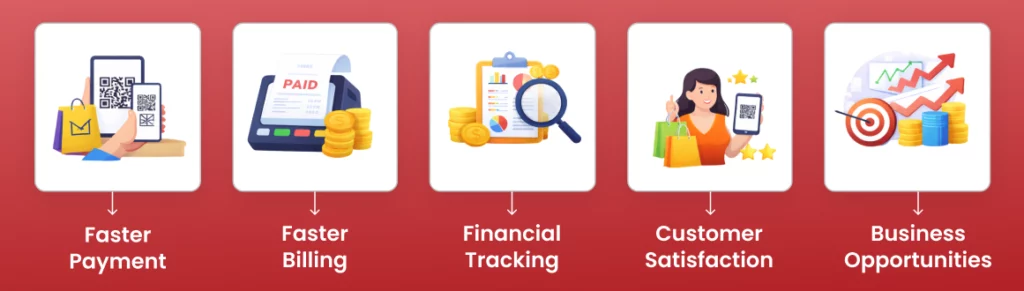
Increased Payment Convenience
Customers can pay quickly using mobile apps without carrying cash or cards.
Faster Billing Process
QR Code Billing reduces checkout time and improves store efficiency.
Improved Financial Tracking
Retail billing software automatically records QR payments for accurate accounting.
Higher Customer Satisfaction
Quick and hassle-free payment methods enhance the overall shopping experience.
Business Growth Opportunities
Digital payment solutions help retailers modernize their operations and attract tech-savvy customers.
Features to Look for in Retail Billing Software with QR Code Billing
When selecting retail billing software, businesses should look for features that support seamless billing and payment management.
Important features include:
QR Code Billing and QR bill generation
Integrated QR code payment system
GST-compliant invoicing
Inventory management
Sales reports and analytics
Payment tracking and reminders
Mobile and desktop access
Data backup and security
These features help retailers manage billing, payments, and inventory from a single platform.
How Vyapar Helps Retail Businesses with QR Code Billing
Vyapar provides powerful retail billing software designed specifically for small and medium businesses in India.
With Vyapar, retailers can easily implement QR code billing and accept QR payments from customers.
Vyapar helps businesses:
Generate professional QR bills instantly
Accept payments through a QR code payment system
Track sales and transactions automatically
Manage inventory and billing in one place
Generate detailed financial reports
By using Vyapar’s smart billing features, retailers can simplify daily operations and focus on growing their business.
Final Thoughts
The retail industry is rapidly moving toward digital transformation, and QR Code Billing is playing a major role in this shift. By adopting QR-based billing and payment solutions, retailers can improve operational efficiency, speed up transactions, and provide a better customer experience.
Modern retail billing software with QR code payment systems enables businesses to generate QR bills, accept instant QR payments, and maintain accurate financial records.
For retailers looking to modernize their billing process and stay competitive, implementing QR Code Billing is a smart and future-ready business decision.
Frequently Asked Questions (FAQs)
How does QR Code Billing work in retail stores?
Retailers generate a bill with a QR code through their billing software. Customers scan the code with a mobile wallet or UPI app, confirm the payment, and the transaction is instantly recorded. This speeds up checkout and eliminates the need for cash handling.
How does QR Code Billing improve customer experience?
Customers can pay instantly by scanning a QR code, reducing long queues at checkout. It also allows contactless payments, making transactions safer and faster, which increases customer satisfaction.
How can a retail business in India set up QR code payment acceptance?
A retail business can enable QR payments by registering on UPI apps like Google Pay, PhonePe, or Paytm, completing KYC, and displaying the generated QR code for instant customer payments.
Does QR Code Billing reduce operational costs?
Yes. Digital billing eliminates the need for manual reconciliation and cash handling, reducing administrative workload and operational costs.
Is QR Code Billing safe for retail transactions?
Yes. QR Code Billing ensures secure digital payments, reduces physical contact, and minimizes errors from manual payment entry.
I’m a business enthusiast with 8+ years of experience in business management and finance, holding a Bachelor of Business Management (BBM) in Marketing and an MBA in Finance. With expertise in marketing, accounting, financial management, business law, MIS, and business economics, I focus on simplifying complex business and finance topics into clear, practical insights for entrepreneurs, professionals, and students.
- "Tax Professional & Business Finance Expert"
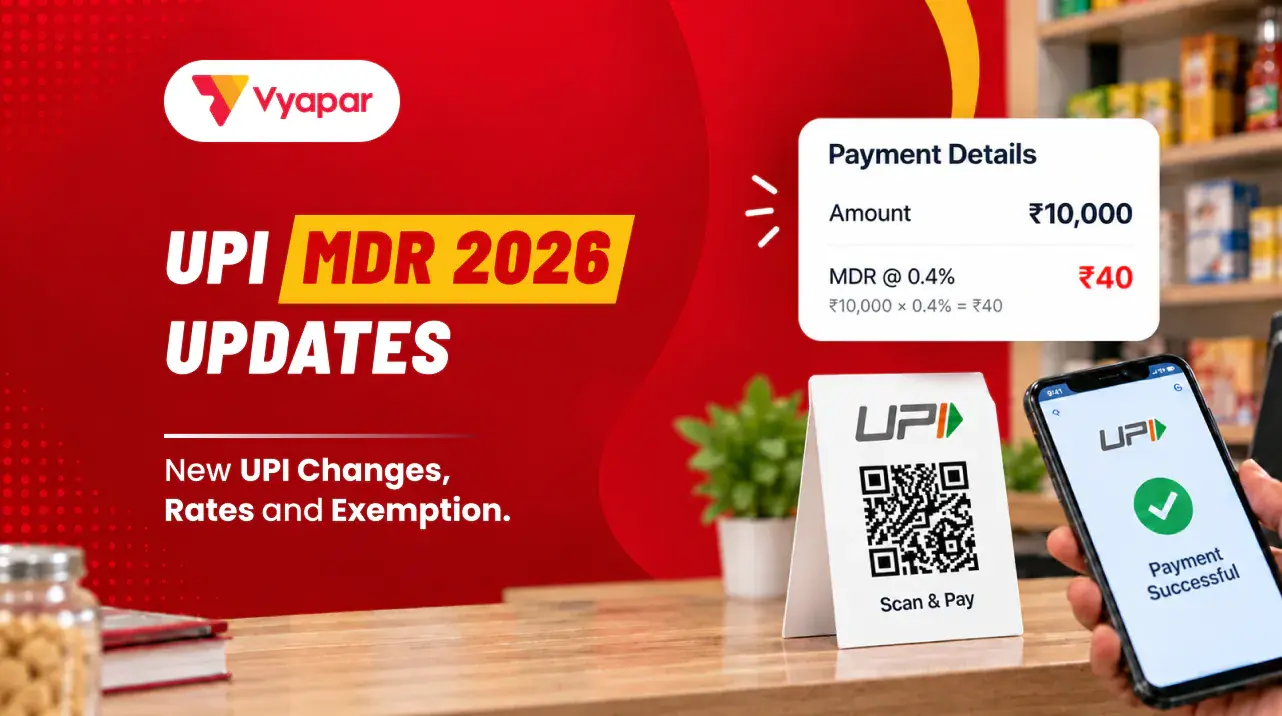
KEY TAKEAWAYS Start date is 15 October 2026: Not 1 April. Messages circulating about an April rollout are wrong The rate is 0.4%: On P2M UPI payments above Rs 2,000, capped at Rs 300 per transaction Small shops pay nothing: Merchants in the P2PM category receiving up to Rs 1 lakh a month have zero…
Introduction On 3 August 2026, the Rajya Sabha passed the Micro, Small and Medium Enterprises Development (Amendment) Bill 2026, bringing some of the biggest changes to MSME rules in years. Along with fresh announcements in the Union Budget 2026-27, there is a lot that MSME owners across India need to know about, from faster payments…
KEY TAKEAWAYS FSSAI license is mandatory for every food business in India, including restaurants, cloud kitchens, traders, manufacturers, and distributors There are three types: Basic Registration (turnover up to ₹12 lakh), State License (up to ₹20 crore), and Central License (above ₹20 crore) Apply for a food licence online through the official FoSCoS portal at…