FSSAI license is mandatory for every food business in India, including restaurants, cloud kitchens, traders, manufacturers, and distributors
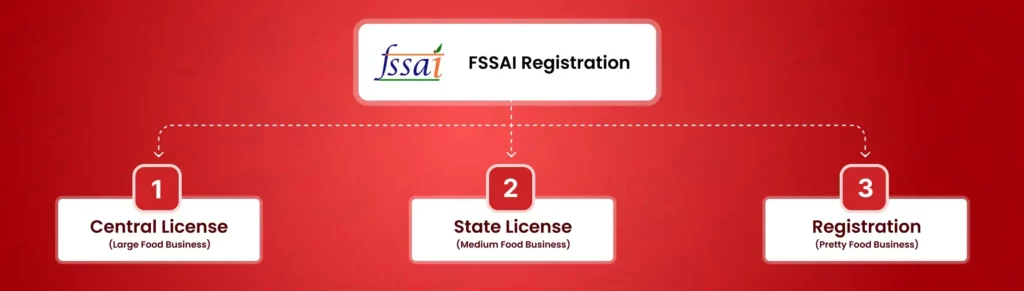
There are three types: Basic Registration (turnover up to ₹12 lakh), State License (up to ₹20 crore), and Central License (above ₹20 crore)
Apply for a food licence online through the official FoSCoS portal at foscos.fssai.gov.in
The FSSAI certificate is a 14-digit number that must be displayed at your place of business and printed on all food packages
Non-compliance penalties range from ₹1 lakh to ₹10 lakh, depending on the violation
Introduction
If you run a restaurant, a sweet shop, a cloud kitchen, or any food-related business in India, the FSSAI license is not optional. It is a legal requirement under the Food Safety and Standards Act, 2006. Without a valid FSSAI registration, your food business cannot legally operate, and you risk heavy penalties and closure.
FSSAI stands for Food Safety and Standards Authority of India. It is a government body under the Ministry of Health and Family Welfare that regulates the entire food business in India. This guide explains what FSSAI registration is, the types of food licences available, documents required, fee structure, and how to complete the food licence application process online.
What is FSSAI License?
The FSSAI license is a 14-digit registration or licence number that is issued to every Food Business Operator (FBO) in India. This number must be printed on all food packages and displayed prominently at your business premises. It confirms that your food business meets the safety and hygiene standards set by the government.
Every person or entity involved in the manufacturing, processing, storage, transportation, distribution, or sale of food products needs to obtain an FSSAI registration or licence before starting operations.
Who Needs FSSAI Registration?
These businesses must get an FSSAI license or registration:
Restaurants, hotels, dhabas, bars, and canteens
Bakeries, confectioneries, sweet shops, and snack stalls
Cloud kitchens and online food delivery businesses
Food manufacturers and processing units
Wholesalers, distributors, and food retailers
Dairy units, milk vendors, and chilling units
Cold storage and refrigerated transport operators
Importers and exporters of food products
Street food vendors, hawkers, and temporary stall holders
Caterers, banquet halls, and mid-day meal services
Types of FSSAI License
The type of FSSAI registration you need depends on your annual turnover and the scale of your operations:
Type
Eligibility (Annual Turnover)
Form to Fill
Fee
Basic Registration
Up to Rs 12 lakh
Form A
Rs 100
State FSSAI License
Rs 12 lakh to Rs 20 crore
Form B
Rs 2,000 to Rs 5,000
Central FSSAI License
Above Rs 20 crore
Form B
Rs 7,500
The FSSAI certificate issued under all three types is valid for 1 to 5 years, depending on how many years you choose at the time of application.
Note: Cloud kitchens, e-commerce food businesses, importers, exporters, and businesses operating in two or more states require a Central FSSAI License regardless of turnover.
The documents needed differ slightly depending on the type of food licence you are applying for.
For Basic FSSAI Registration:
Photo identity proof of the business owner (Aadhaar, PAN, Voter ID)
Business registration proof (partnership deed, certificate of incorporation, or shop and establishment licence)
Proof of address for business premises (rental agreement, utility bill, or NOC from owner)
List of food products to be manufactured or sold
Bank account details
Additional for State and Central FSSAI License:
Form B duly signed and completed
Layout plan of the processing unit showing dimensions
List of equipment and machinery with installed capacity
Water analysis report confirming potability
List of directors or partners with address and photo ID
For Central FSSAI License, additional documents include the IE Code from DGFT for importers and exporters, NOC from FSSAI, and a recall plan where applicable.
How to Apply for FSSAI License Online (Step-by-Step)
The food licence apply process is completed entirely on the FoSCoS portal. Here are the steps:
Visit foscos.fssai.gov.in and create your account
Select your state and type of food business
Choose the FSSAI license type based on turnover
Fill Form A (Basic Registration) or Form B (State and Central License)
Upload all required documents
Pay the applicable FSSAI registration fee online
Submit and note your application reference number
Track status using the reference number on the FoSCoS portal
The department reviews documents and may inspect your premises
Once approved, download your FSSAI certificate from the portal
Important: The department can accept or reject your application within 7 days of submission. If rejected, the reason is communicated in writing. If the status shows “Application Reverted,” you must respond within 30 days to avoid rejection.
Benefits of Getting FSSAI License
Legal protection and the right to operate your food business without interference
The FSSAI logo on products builds consumer trust and signals quality
Easier access to bank loans, investors, and government schemes for food businesses
Enables you to list on delivery platforms like Zomato and Swiggy
Mandatory for export of food products to international markets
Check Out: Generate GST-Compliant Invoices with Vyapar Invoicing Software
Penalties for Non-Compliance
Operating without a valid FSSAI license or violating food safety standards attracts serious penalties:
Violation
Penalty
Food quality not meeting standards
Up to Rs 2 lakh (Rs 25,000 for petty manufacturers)
Sub-standard food
Up to Rs 5 lakh
Misbranded food
Up to Rs 3 lakh
Misleading advertisement
Up to Rs 10 lakh
Unhygienic processing
Up to Rs 1 lakh
Non-compliance with Food Safety Officer
Up to Rs 2 lakh
Renewal of FSSAI License
Your FSSAI license must be renewed before it expires. Apply for renewal at least 30 days before the expiry date on the FoSCoS portal. If you miss the deadline, you may have to apply for a fresh FSSAI registration, which delays your operations.
Conclusion
Getting your FSSAI license is not just about ticking a compliance box. It is the foundation of a credible food business. Customers look for the FSSAI certificate number on food products and premises as a sign of safety and quality. The food licence apply process is now fully online through FoSCoS, making it faster than ever. Once your FSSAI registration is in place, managing daily billing, inventory, and GST compliance becomes the next priority. A good accounting software helps you keep books clean, generate GST-compliant invoices, and stay audit-ready from day one.
Vyapar Editorial Team represents the officially authorized content and review function at Vyapar App, a business management, billing and accounting software used by millions of SMEs. Articles published under this author are created and reviewed by subject-matter experts to ensure accuracy, compliance, and practical business value.
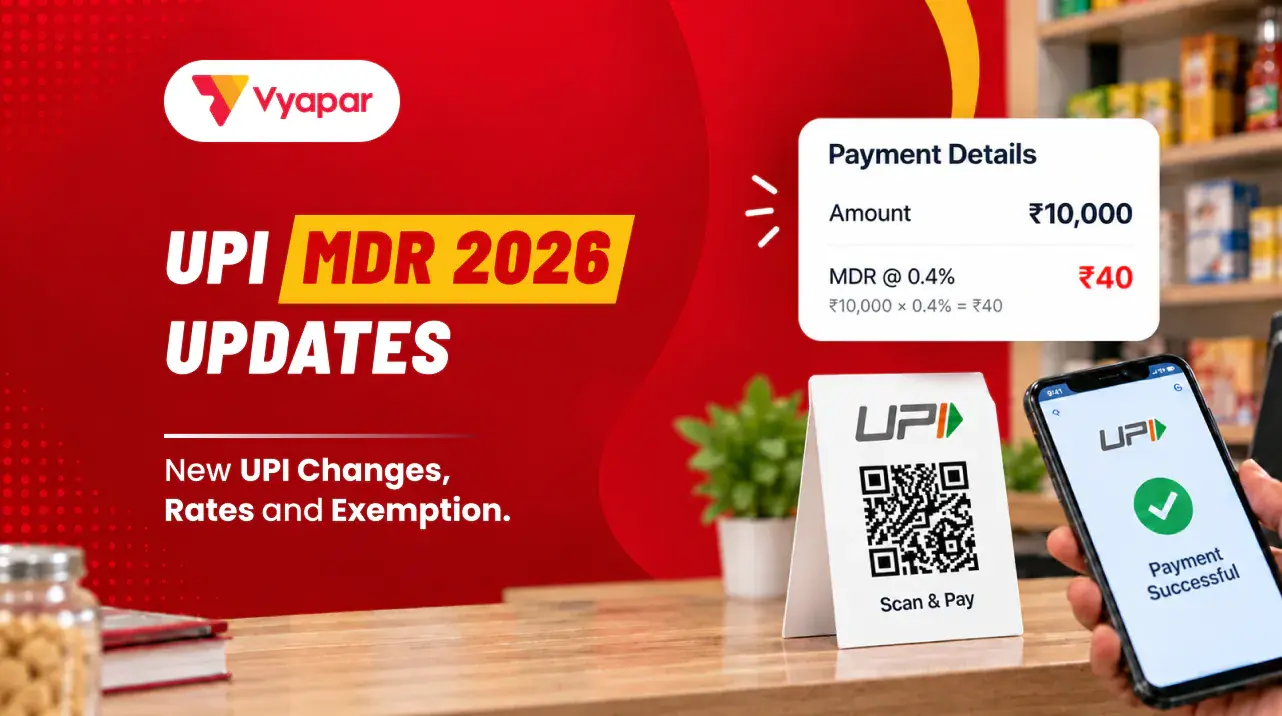
KEY TAKEAWAYS Start date is 15 October 2026: Not 1 April. Messages circulating about an April rollout are wrong The rate is 0.4%: On P2M UPI payments above Rs 2,000, capped at Rs 300 per transaction Small shops pay nothing: Merchants in the P2PM category receiving up to Rs 1 lakh a month have zero…
Introduction On 3 August 2026, the Rajya Sabha passed the Micro, Small and Medium Enterprises Development (Amendment) Bill 2026, bringing some of the biggest changes to MSME rules in years. Along with fresh announcements in the Union Budget 2026-27, there is a lot that MSME owners across India need to know about, from faster payments…
Introduction If you have ever taken a business loan or checked EMI rates, you have already been affected by the repo rate. It is the single most important interest rate in India because it decides how expensive or cheap it is for banks to borrow money from the Reserve Bank of India (RBI). That cost…