TFor many Indian businesses, work doesn’t always happen at a desk. Sales happen in markets, warehouses, delivery vans, exhibitions, and customer locations. In those situations, waiting to “get back to the office computer” to create a bill slows everything down.
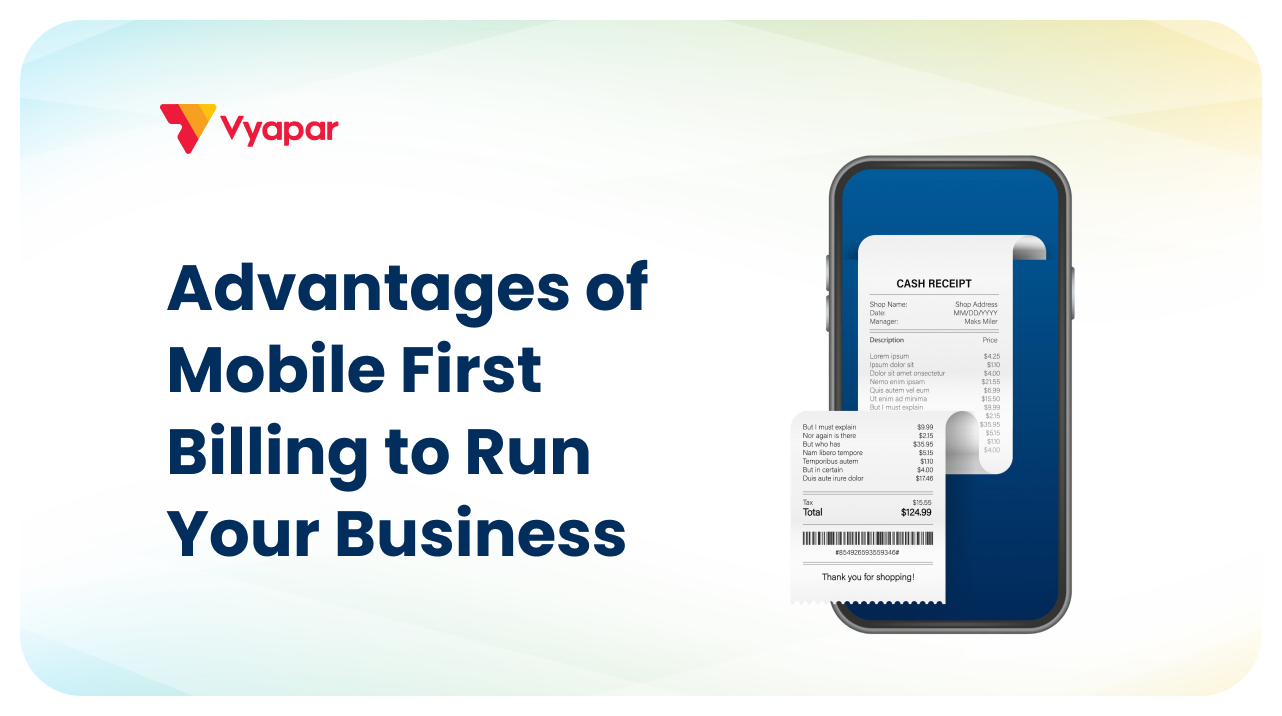
That’s why mobile first billing has started replacing traditional desktop billing systems. Instead of treating the phone as a backup device, it becomes the main tool, fast, simple, always with you.
In this guide, let’s break down what changes, why it matters, and where it actually makes life easier.
Why Mobile-First Billing Matters?
When billing happens instantly, at the point of work, payments come faster, mistakes reduce, and records stay accurate.
For businesses that move constantly, mobile billing turns the phone into a portable cash counter, invoice machine, and mini-accounting system. Think about sales trips, doorstep deliveries, field orders, replacements, and quick service visits. Mobile billing removes the delay between doing the work and getting paid.
1. Offline Billing Capability
Connectivity in India is improving, but it is not perfect. Network drops at the wrong time can stall a sale. Offline billing capability solves this problem.
You can create invoices, generate estimates, collect payments, and issue receipts even without the internet. Everything syncs automatically once the connection returns.
Why it matters:
No interrupted sales
No “network problem” excuses
Data saved locally before syncing
Field teams remain productive anywhere
For rural businesses, moving teams, and warehouses, offline mode isn’t just a feature. It’s survival.
2. Cloud Accounting Benefits
Traditional billing systems store everything on a single computer. If something happens to that machine, the data is at risk.
Mobile-first billing usually uses cloud-based syncing. Your records are backed up and available across devices.
Key benefits:
Bills update across phone, desktop, and tablet
No manual backup drives
Accountant access without file transfers
Real time understanding of business performance
Protection even if a device is lost or damaged
Imagine opening your phone and instantly seeing today’s sales, outstanding payments, stock levels, and expenses. That kind of clarity changes decision-making.
3. Data Security on Mobile
Many business owners ask, “If everything is on my phone, is it safe?”
Modern mobile billing apps use bank grade protection. In many cases, they are safer than shared desktop systems.
Typical protections include:
App locks and biometric access
Encrypted storage
Automatic backups
Role-based access for staff
Remote logout if a device is lost
Unlike paper records, digital records also leave an audit trail. Fraud becomes easier to detect and harder to hide.
4. Accessing Reports Remotely
When reports live in your pocket, you do not need to call the office to check numbers. You can see them yourself.
With mobile billing, you can track:
Sales
Profit
Outstanding customers
Expenses
GST-ready reports
From anywhere, anytime. This reduces guesswork and speeds up decisions. Problems get spotted earlier rather than at a financial year audit.
5. Mobile vs Desktop Billing
It is not mobile versus desktop billing. Both have their place. They simply serve different needs.
Mobile billing:
On the spot billing
Perfect for deliveries and field work
Quick entries
Real-time data sync
Easy invoice sharing via WhatsApp or SMS
Desktop billing:
Detailed analysis
Bulk data entry
Longer accounting sessions
The best setup for many businesses is mobile plus desktop working together. Mobile handles movement and transactions. Desktop handles deeper review. Everything stays connected.
6. Faster Collections and Better Customer Experience
Delayed billing leads to delayed payments. Mobile billing allows billing the moment the job is finished or the product is delivered.
You can generate the invoice, share it immediately, attach payment options, and collect money right there.
Result:
Fewer unpaid dues
Quicker cash cycles
More professional communication
Customers like instant digital receipts because they feel transparent and organized.
7. Reduced Paper Dependence
Paper fades, gets lost, and creates clutter. Manual bill books produce errors.
Mobile billing offers:
Digital storage
Search-friendly records
Automatic numbering
Reprints anytime
This means cleaner books and easier compliance at tax time.
Distributors can issue invoices during delivery instead of later. Transport businesses can create billing documents at loading points. Technicians can bill immediately after repairs. Food truck owners can serve faster with instant billing. Retailers can reduce queue pressure during rush hours.
Wherever the business moves, billing now moves with it.
Top Highlights
Top features:
Offline billing capability
Cloud sync
WhatsApp invoice sharing
Stock tracking
Payment reminders
GST-ready reporting
Key benefits:
Faster billing
Fewer mistakes
Stronger visibility
Flexible work
Better cash flow
Improved customer trust
A Practical Note on Tools
Mobile-first billing works best when it connects with accounting, inventory, and reporting. That’s why many businesses prefer solutions like Vyapar simple mobile billing paired with deeper control when needed.
It doesn’t replace good financial habits. It supports them.
Final Thought
Mobile-first billing isn’t just a trend. It is a shift in how Indian businesses operate. It makes billing happen where work happens, not hours later. It keeps records accurate, improves cash flow, and gives owners visibility without waiting for someone else to prepare reports.
For on-the-go businesses, the mobile phone has quietly become the new billing counter.
Frequently Asked Questions (FAQs)
Do I still need a desktop if I switch to mobile-first billing?
Not always. Many small businesses run entirely on mobile. But if you handle large data imports, long accounting tasks, or heavy reporting, keeping a desktop as support can be helpful.
What happens if my phone is lost, do I lose bills and data?
No. If your billing app syncs with the cloud, your data remains safe. You can log in from another phone, change the password, and continue working. Good apps also allow remote logout from the lost device.
Is mobile billing accurate enough for audits and tax filing?
Yes, provided you use a structured billing system that records invoice numbers, dates, and tax details. Digital invoices actually make audits easier because records are complete and traceable.
Can multiple staff members use the same mobile billing account?
Most mobile billing systems support role-based access. You can assign permissions so staff can bill but cannot see confidential financial data. This improves control compared to paper billing.
Does mobile billing work without the internet every day
Yes, as long as the app supports offline billing. Bills are stored locally and sync when the internet returns. Your team keeps working uninterrupted.
Will customers accept mobile invoices instead of paper ones?
Increasingly, yes. Many customers prefer WhatsApp or SMS invoices because they don’t get lost and can be accessed anytime. Paper copies can still be printed if needed.
Is mobile billing suitable for businesses with complex pricing or discount structures?
Yes, as long as you choose software that supports advanced price lists, tax rules, and custom fields. Modern mobile billing apps are built to handle real retail and wholesale complexity.
Does mobile-first billing reduce mistakes or just digitize them?
It usually reduces mistakes. Auto-calculations, predefined rates, GST logic, and duplicate invoice checks prevent many human errors that happen in manual bill books.
Varsha K Vijay is a finance professional with over five years of experience in accounting, GST compliance, and financial operations. She has cleared the CA Foundation and her work spans GST filing, TDS compliance, MIS reporting, and financial content writing.
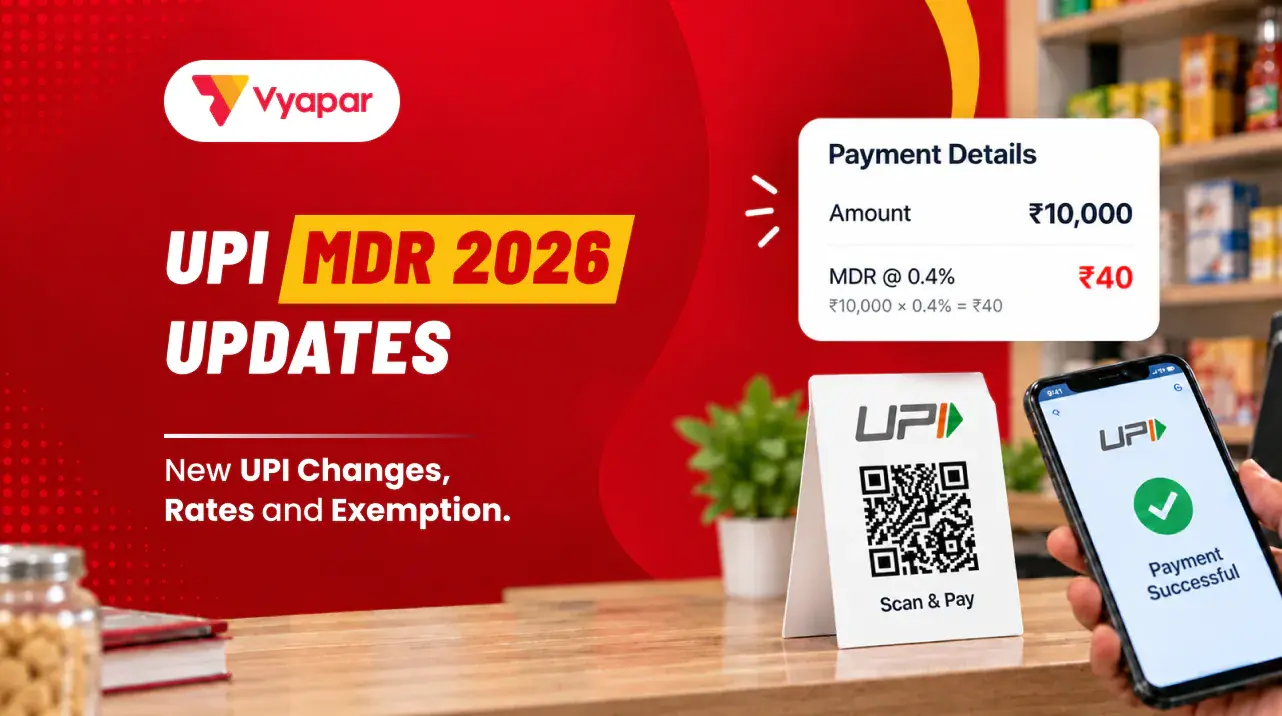
KEY TAKEAWAYS Start date is 15 October 2026: Not 1 April. Messages circulating about an April rollout are wrong The rate is 0.4%: On P2M UPI payments above Rs 2,000, capped at Rs 300 per transaction Small shops pay nothing: Merchants in the P2PM category receiving up to Rs 1 lakh a month have zero…
Introduction On 3 August 2026, the Rajya Sabha passed the Micro, Small and Medium Enterprises Development (Amendment) Bill 2026, bringing some of the biggest changes to MSME rules in years. Along with fresh announcements in the Union Budget 2026-27, there is a lot that MSME owners across India need to know about, from faster payments…
KEY TAKEAWAYS FSSAI license is mandatory for every food business in India, including restaurants, cloud kitchens, traders, manufacturers, and distributors There are three types: Basic Registration (turnover up to ₹12 lakh), State License (up to ₹20 crore), and Central License (above ₹20 crore) Apply for a food licence online through the official FoSCoS portal at…